


Endometriosis affects approximately one in ten women of reproductive age. Among the most debilitating everyday situations, pain while sitting remains one of the least understood.
This pain is not solely linked to inflammation. It can also be organized around mechanical mechanisms: nerve compression, pelvic congestion, loss of fascial gliding, adhesions, and adaptive stiffening.
Understanding these mechanisms helps explain why certain sitting positions quickly become unbearable — and why the seating environment can play an important role in daily tolerance.
Endometriosis doesn’t always shout. It whispers, it claws, it burns — often for years before being recognized. And among all the everyday situations it can make painful, sitting stands out: work meetings, car trips, family meals, waiting rooms, office days.
As a result, what should be a neutral act sometimes becomes an ordeal. The chair is no longer a simple support: it becomes a place of compression, pulling, heaviness, or burning.
Sitting pain in endometriosis is not only a consequence of the disease. It can also be sustained by the way the pelvis, fascia, nerves, and contact points organize themselves under load.
This guide offers a comprehensive overview of the disease, its pain mechanisms, and — above all — what can be done concretely to prevent sitting from becoming a factor that maintains pain.
1. Endometriosis: A Garden Growing in the Night
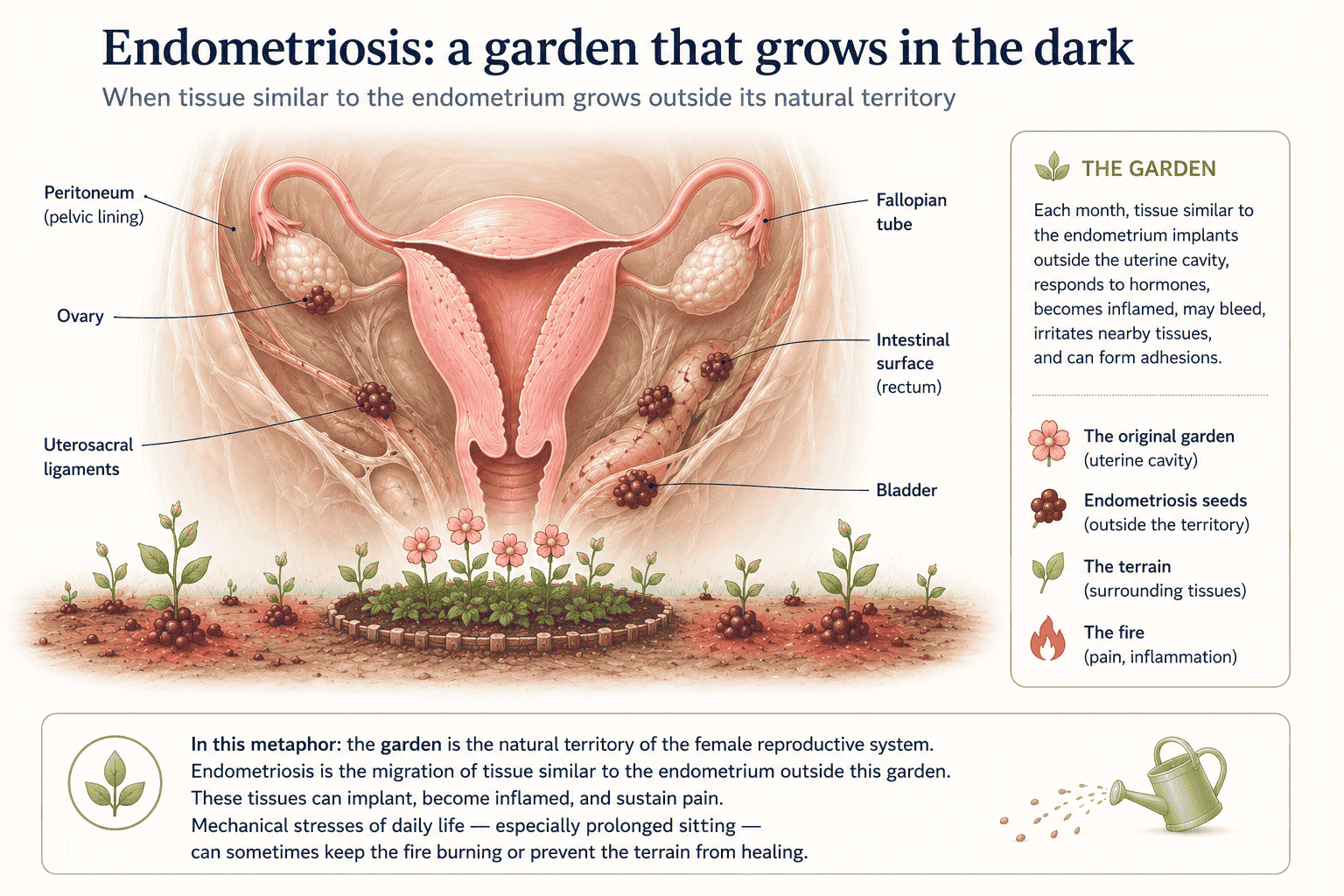
Endometriosis is the story of a garden growing outside its natural territory. Each month, instead of endometrium-like tissue remaining confined to the uterine cavity, fragments can implant elsewhere: on the peritoneum, ovaries, uterosacral ligaments, rectum, bladder, and sometimes even further.
However, these implants are not simply silent presences. They respond to hormonal changes, become inflamed, sometimes bleed, irritate neighboring tissues, and can promote the formation of adhesions. Gradually, certain areas of the pelvis lose their freedom of movement. Consequently, organs glide less freely against one another. Fascia thickens. The tissue environment becomes more sensitive.
In this metaphor, endometriosis is the garden. Pain is the fire. The mechanical stresses of daily life — especially prolonged sitting — are sometimes what keeps the fire burning or prevents the terrain from finding its balance again.
This distinction is essential. Indeed, pain intensity does not always depend solely on the size or number of lesions. It can also depend on the state of the tissue environment: adhesions, scar tissue, muscle tension, congestion, nervous system sensitization, and loss of tissue mobility.
In numbers: endometriosis affects approximately 1 in 10 women of reproductive age. It is a major cause of chronic pelvic pain and infertility, with a diagnostic delay that often remains long after the first symptoms appear (Horne et al., 2024; NICHD, 2025).
The disease involves several intertwined mechanisms: menstrual reflux through the fallopian tubes, genetic susceptibility, immune dysregulation, chronic inflammation, tissue remodeling, and possible environmental factors. Nevertheless, no single hypothesis fully explains all forms of endometriosis. This complexity is precisely what makes management difficult — and why pain cannot be reduced to a single cause.
2. Symptoms: The Secret Language of Pain
Endometriosis does not manifest the same way in every woman. For example, some suffer intensely from adolescence. Others discover the disease during a fertility workup. Moreover, some have visible lesions with few symptoms; others live with major pain despite largely unremarkable test results.
Cardinal Symptoms
Dysmenorrhea — pain during menstruation — is often the first signal. These are not simply ordinary painful periods, but sometimes incapacitating pain that is resistant to common pain relievers and can force daily activities to stop.
Chronic pelvic pain can become cyclical or constant. In addition, it may radiate toward the lower back, hips, thighs, rectum, or perineum. In some women, pain eventually persists even outside of menstruation.
Deep dyspareunia — pain during sexual intercourse — occurs when certain deep pelvic areas are sensitive to pressure or traction: uterosacral ligaments, pouch of Douglas, recto-vaginal compartment, deep adhesions.
Digestive and urinary pain often accompanies infiltrating forms: pain during defecation, bowel changes, pain while urinating, bladder pressure, rectal pain, and sometimes digestive or urinary bleeding depending on the locations involved.
Chronic fatigue is common. Indeed, it results from inflammation, persistent pain, sleep disturbances, treatments, and the constant physical effort of adapting to a painful terrain.

Sitting pain deserves particular attention, as it sits at the intersection of several mechanisms: inflammation, compression, traction, congestion, nerve hypersensitivity, and loss of mechanical variability.
Lesion Types and Locations
Symptoms vary depending on the location and extent of the lesions. Therefore, the following table offers a synthetic overview, useful for identifying the dominant mechanisms in each patient.
| Symptom | Description | Common Location |
|---|---|---|
| Dysmenorrhea | Extremely painful periods, resistant to common pain relievers | Uterus, ovaries, peritoneum |
| Chronic pelvic pain | Persistent pain outside of menstruation, sometimes cyclical, radiating to thighs or back | Pelvis, peritoneum, uterosacral ligament |
| Deep dyspareunia | Deep pain during sexual intercourse | Pouch of Douglas, recto-vaginal compartment |
| Dysuria / Dyschezia | Pain during urination or defecation, especially during menstruation | Bladder, rectum |
| Sitting pain | Nerve compression, pelvic congestion, traction on adhesions | Sit bones, pudendal and sciatic nerves, uterosacral ligaments |
| Infertility | Affects 30 to 50% of women with the condition | Fallopian tubes, ovaries |
| Chronic fatigue | Related to systemic inflammation, persistent pain, and sleep disturbances | — |
Pain Mechanisms by Type
Pain intensity does not always reflect the extent of the lesions. Consequently, each type of pain corresponds to a different dominant mechanism, which guides management decisions.
| Pain Type | Dominant Mechanism | Location |
|---|---|---|
| Dysmenorrhea | Inflammation (↑ prostaglandins) + local ischemia | Uterus, ovaries |
| Chronic pelvic pain | Neuropathy + adhesions (organ traction) | Peritoneum, uterosacral ligament |
| Deep dyspareunia | Infiltration of pelvic nerves | Pouch of Douglas |
| Digestive pain | Compression or infiltration of the bowel | Rectum, sigmoid colon |
| Urinary pain | Bladder involvement | Bladder |
| Sitting pain | Nerve compression + congestion + adhesion traction | Sit bones, pelvic nerves, pelvic floor |
10 to 20% of women with endometriosis are asymptomatic: the disease is discovered incidentally during a fertility workup. Conversely, symptom intensity does not always reflect the extent of the lesions — a reality that often complicates and delays diagnosis.
3. Why Endometriosis Pain When Sitting Can Become Worse
Among all the aggravating factors in endometriosis, sitting occupies a particular place. Indeed, it is daily, often prolonged, socially unavoidable — and yet rarely analyzed as a genuine mechanical environment.
The common advice is to “move more,” “stand up regularly,” or use a cushion. Of course, these suggestions can help, but they don’t explain what is actually happening in the pelvis when a woman with endometriosis sits for a long time in an ordinary chair.
Direct Nerve Compression
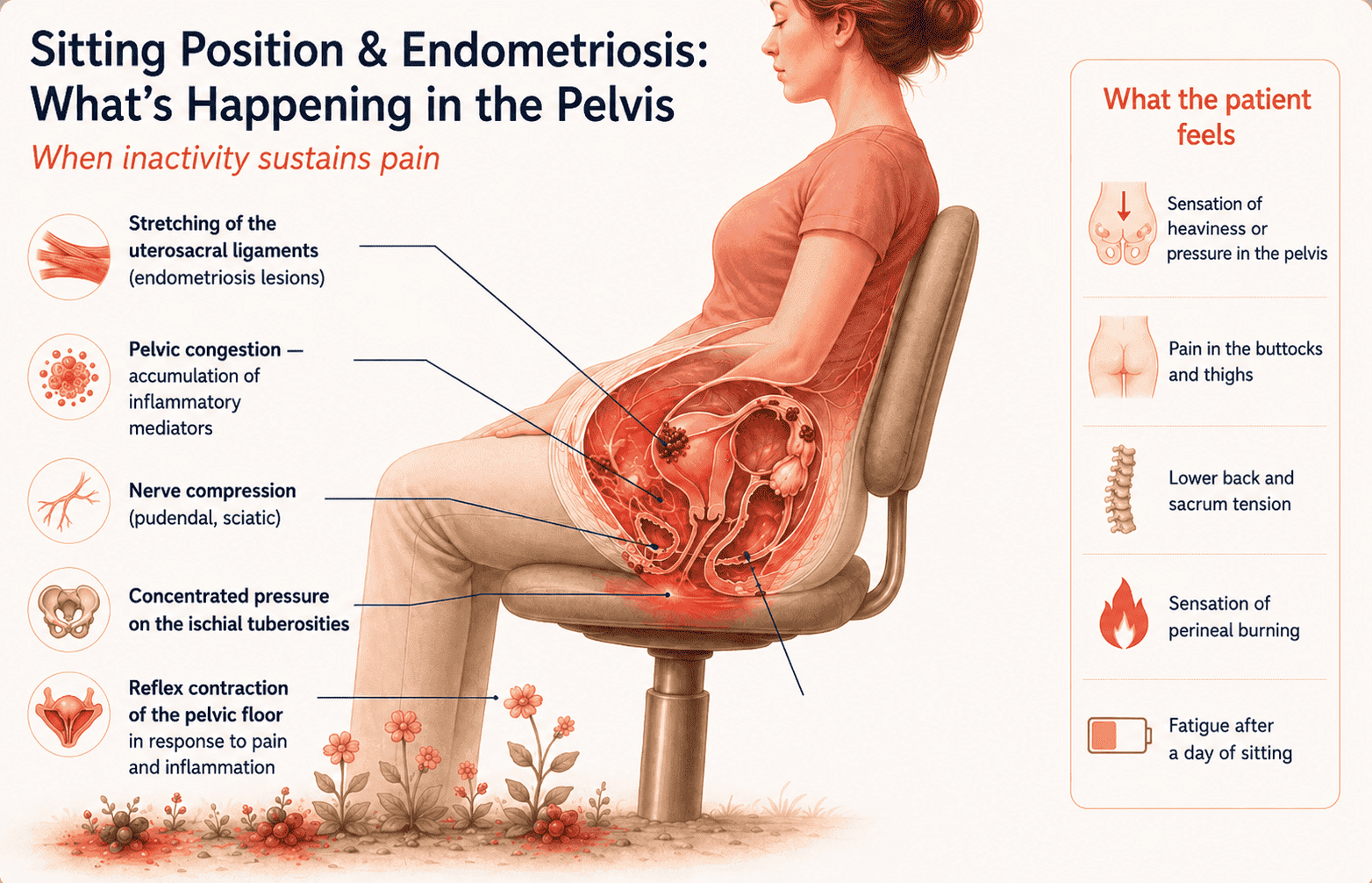
When seated, body weight concentrates on the sit bones, perineum, sacral or coccygeal area depending on body structure, posture, and tissue condition. If the pudendal nerve, perineal branches, cluneal nerve, or sciatic pathway are already sensitized, this compression can trigger burning, shooting pain, paresthesia, or a sensation of deep pressure.
In some forms of deep endometriosis, lesions, adhesions, or scar tissue can also alter the mechanical relationships around the nerves. As a result, pain becomes more easily triggered by position, pressure, or duration of sitting.
Pelvic Congestion
Static sitting can also impair local circulation. Indeed, when the pelvis remains immobile, natural pressure variations decrease. Consequently, venous return and tissue exchanges may become less favorable, particularly in a terrain that is already inflamed or hypervascularized.
Pain may then take the form of heaviness, deep tension, internal swelling, or the sensation of a “full” pelvis. In other words, in the garden metaphor, this is a terrain that can no longer breathe: water circulates less, roots pull, the soil compacts.
Traction on Adhesions
Adhesions are areas where tissues that should glide freely against one another become partially fixed. For example, they may be related to the disease itself, or to successive surgeries.
When seated, hip flexion, pelvic orientation, pressure on the perineum or sacrum, and micro-movements of the trunk all alter tensions throughout the pelvic compartment. If tissues no longer glide freely, each shift in weight can pull on sensitive areas.
Detailed Mechanisms
| Mechanism | Explanation | Associated Pain |
|---|---|---|
| Pelvic compression | Pressure on pelvic nerves (sciatic, pudendal) via adhesions or deep lesions | Pelvis, buttocks, thighs, lower back |
| Pelvic congestion | Reduced blood flow → accumulation of inflammatory mediators (prostaglandins, cytokines) | Uterus, ovaries, peritoneum |
| Uterosacral ligament tension | Deep lesions are stretched when seated, especially if adhesions pull on organs | Lower back, sacrum, rectum |
| Pelvic floor dysfunction | Prolonged reflex contraction → pain-contraction-pain cycle | Perineum, vagina, anus |
| Uterine retroversion | A retroverted uterus may contact the rectum or adhesions when seated | Rectum, coccyx |
4. The Invisible Mechanics: Fascia, Variability, and Stiffening
There is a less visible but fundamental level to understanding why some women continue to suffer while sitting even when medical treatment partially controls inflammation.
Fascia: The Stress Transmission Network
Fascia are not simply passive wrappings. Instead, they form a continuous network of connective tissue that participates in gliding between structures, stress transmission, body awareness, and the mechanical regulation of movement (Schleip, 2003; Langevin, 2006).
In a functional system, mechanical stresses never remain fixed in one place. Instead, they circulate, redistribute, and modulate. Thus, breathing, postural micro-adjustments, tone variations, and changes in contact points allow tissues to remain adaptable.
In women with endometriosis, especially after one or more surgeries, this inter-fascial gliding may be impaired. In addition, scar tissue, adhesions, and protective muscle tensions alter the organization of the pelvis. Consequently, certain areas become denser, less mobile, and more sensitive to repeated stress.
The Stiffening Spiral
A standard seat can worsen this process by imposing a mechanically limited organization: the same contact points, the same load paths, the same compressions, for hours at a time.
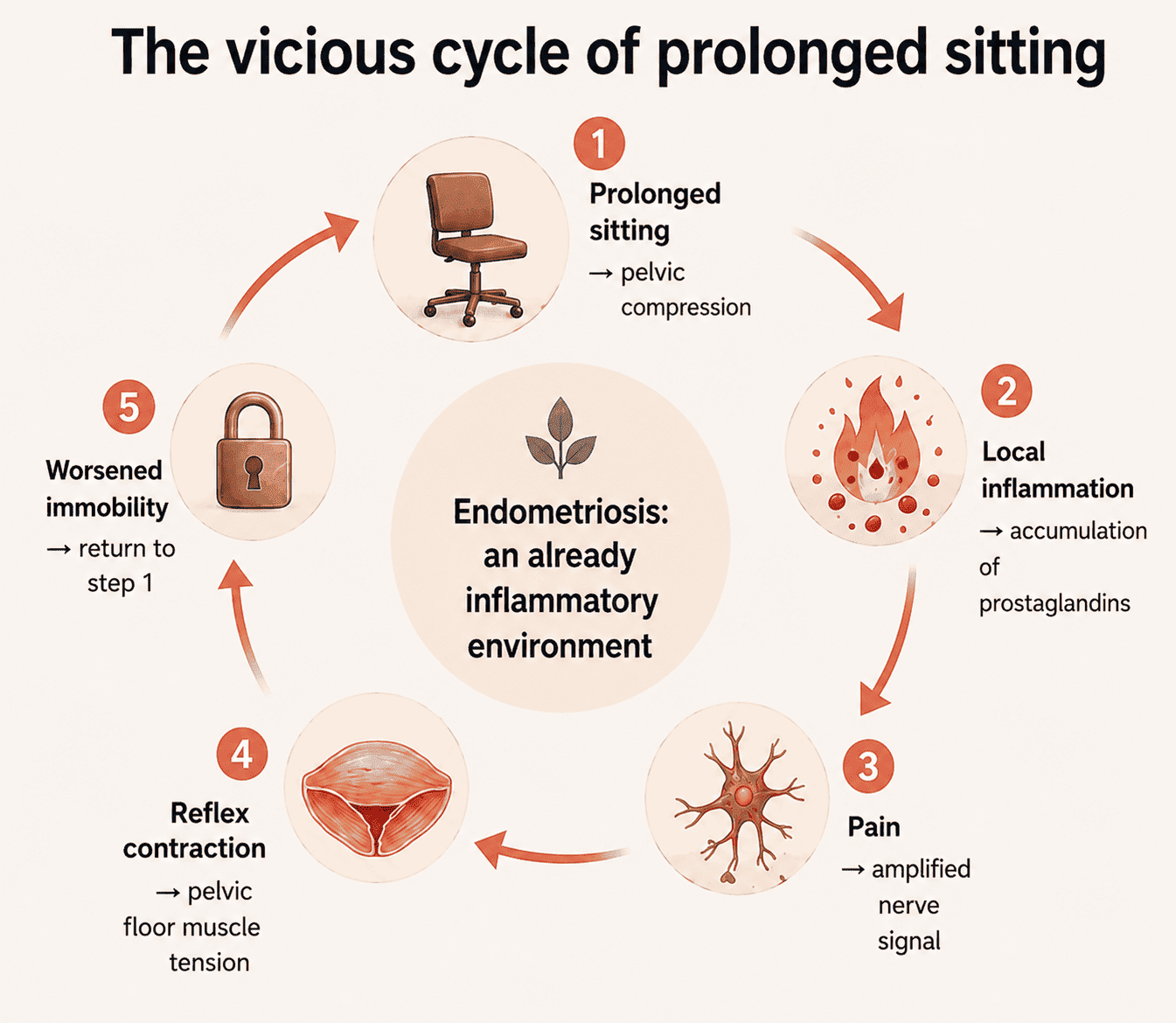
The problem is not only pressure. Rather, it is the repetition of poorly modulated pressure. Tissues glide less. As a result, muscles increase their protective tension. The nervous system raises its vigilance. Ultimately, pain promotes stiffening, and stiffening sustains pain.
It is not only the intensity of a mechanical stress that is problematic. It is also its lack of variation. Living tissues appear to tolerate mechanically variable environments better than prolonged, repetitive, poorly modulated stress. When this variability disappears, stiffening can progressively take hold.
This is where the seating question becomes central. Indeed, an ordinary chair does not simply support the body: it organizes the stresses placed upon it. Therefore, if this organization is rigid, it can become a factor that sustains pain.
5. Aggravating and Soothing Factors
What Feeds the Fire
Aggravating Factors
| Category | Examples | Mechanism |
|---|---|---|
| Hormonal | Unopposed estrogens, poorly matched hormonal contraception | Stimulation of lesion growth |
| Behavioral | Smoking, alcohol, excessive caffeine | Increased inflammation and oxidative stress |
| Dietary | Gluten, dairy, ultra-processed foods | Pro-inflammatory effect via gut microbiome |
| Psychological | Chronic stress, anxiety, depression | ↑ Cortisol → amplified pain perception |
| Environmental | Endocrine disruptors (pesticides, plastics) | Disruption of hormonal balance |
| Postural | Prolonged immobile sitting, driving, desk work without breaks | Compression, congestion, loss of mechanical variability |
Hormonal fluctuations play a major role. Indeed, estrogens can promote the activity of endometriotic lesions and fuel painful flares. For some women, the premenstrual or menstrual period acts like a sudden climate shift in an already inflamed garden.
Daily inflammatory factors — smoking, alcohol, poorly tolerated foods, lack of sleep, chronic stress overload — can increase overall tissue sensitivity. This is not about blaming patients, but recognizing that certain contexts make the system more reactive.
Chronic stress can amplify pain perception. Indeed, when the nervous system remains on alert, the tolerance threshold decreases. As a result, a previously manageable stress can become painful.
Prolonged immobile sitting sustains several mechanisms simultaneously: compression, congestion, reduced gliding, fixed contact points, reduced micro-adjustments. Consequently, it acts like an unfavorable climate on an already vulnerable terrain.
The Healing Rains
Soothing Strategies
| Category | Examples | Mechanism |
|---|---|---|
| Dietary | Omega-3s (fatty fish), turmeric, ginger; reducing gluten and dairy | Reduction of pro-inflammatory prostaglandins |
| Supplements | Magnesium, vitamin D, NAC (N-acetylcysteine) | Immune modulation and antioxidant support |
| Physical activity | Yoga, swimming, gentle walking | Endorphin release + stress reduction |
| Manual therapies | Osteopathy, pelvic physical therapy | Releasing adhesions, improving pelvic mobility |
| Stress management | Meditation, cognitive-behavioral therapy (CBT) | Reduction of central pain sensitization |
| Postural | Bioactive seating, alternating sit/stand, breaks every 30–60 min | Avoids pelvic congestion and nerve compression |
| Local heat | Hot water bottle, heat patch | Vasodilation → relief of cramps |
Anti-inflammatory nutrition can help some women: omega-3 intake, reduction of poorly tolerated pro-inflammatory foods, attention to the microbiome, and individual adaptation rather than a standardized diet (Saunders & Horne, 2025).
Pelvic physical therapy and manual therapies can help restore mobility, release hypertonicity, improve body awareness, and reduce certain mechanical stresses. However, their benefit may erode if the daily mechanical environment then reproduces the same fixed compressions.
Complementary approaches — magnesium, vitamin D, N-acetylcysteine, adapted physical activity, breathing work, relaxation, psycho-somatic support — can help calm the terrain, depending on the situation and always in coordination with healthcare professionals.
Progressive return to movement is often essential. Indeed, movement is not just physical activity: it is information given to the tissues. However, the key is that this movement must be tolerable, stable, non-aggressive, and compatible with the state of the system.
6. Available Treatments
There is no universal definitive cure for endometriosis. Therefore, the goal of treatments is to reduce inflammation, limit lesion progression, relieve pain, preserve fertility when desired, and improve quality of life.
Medical Treatments
Pain relievers and anti-inflammatories may be offered to manage painful episodes. However, their effectiveness varies by profile and sometimes remains insufficient in chronic or complex forms.
Hormonal treatments — hormonal contraception, progestins, hormonal IUDs, GnRH analogs in certain situations — aim to reduce the hormonal activity that stimulates lesions. They can decrease pain, but their tolerability and effectiveness must be assessed individually.
| Class | Examples | Mechanism | Main Side Effects |
|---|---|---|---|
| Pain relievers / NSAIDs | Acetaminophen, ibuprofen, ketoprofen | Prostaglandin inhibition | Gastric ulcers, kidney stress |
| Combined oral contraceptive (continuous) | — | Suppresses ovulation → lesion atrophy | Thromboembolic risk, weight gain |
| Progestins | Dienogest, norethindrone acetate | Decidualization of lesions → reduced inflammation | Irregular bleeding, acne |
| GnRH analogs + add-back therapy | Leuprolide, goserelin | Induced menopause → stops estrogen stimulation | Hot flashes, reversible bone loss |
| Hormonal IUD | Mirena® | Local levonorgestrel release → lesion atrophy | Spotting, functional ovarian cysts |
Meanwhile, new therapeutic avenues are being explored: inflammation modulation, angiogenesis, immune system, neuro-inflammatory pathways, endocannabinoids. Overall, these approaches confirm that endometriosis is a complex systemic disease, not a simple local anomaly.
Surgery
Surgery may be indicated in certain forms, particularly when lesions are deep, debilitating, resistant to treatment, or involve organs such as the bowel, bladder, or ureters. In such cases, it can provide significant relief.
However, surgery does not always resolve the full pain problem. Internal scar tissue, post-operative adhesions, protective muscle tensions, altered gliding, and sensitization can persist after the procedure.
| Procedure | Indications | Benefits | Risks |
|---|---|---|---|
| Laparoscopic excision | Symptomatic endometriosis resistant to treatment | Relief in 70–80% of cases | Recurrence (20–40% at 5 years), post-op adhesions |
| Hysterectomy ± oophorectomy | Severe forms with adenomyosis, after other treatments fail | Resolution if surgical menopause achieved | Permanent infertility, early menopause |
| Bowel / urinary surgery | Deep endometriosis (rectum, bladder) | Preservation of organ function | Fistulas, stenosis |
“Surgery can remove lesions, but it does not automatically restore pelvic mechanics. Adhesions, scar tissue, neuromuscular compensations, and loss of gliding sometimes need to be addressed separately.”
— Integrative clinical perspective, Blue Portance, 2026
The Daily Mechanical Environment
Between appointments, rehabilitation sessions, and treatments, one element is often overlooked: the hours spent sitting. Yet, in practice, these hours can represent a major daily mechanical stress on the pelvis.
If sitting always reproduces the same compressions, it can undermine gains made elsewhere. Conversely, if it allows load redistribution, preserves stabilized mobility, and respects the pelvic profile, it can become a useful functional ally.
7. What Should an Adapted Seat Offer for Endometriosis?
When sitting becomes painful, the question is not only how to relieve pain in the moment. It also involves understanding what characteristics a seat should ideally have to limit the stresses the pelvis is already exposed to.
There is no universal seat capable of addressing every situation. However, several principles appear particularly relevant when pelvic, perineal, or sitting pain is present.
Limit Unnecessary Compression
An adapted seat should avoid concentrating pressure persistently on the same sensitive areas: perineum, sit bones, coccygeal region, or already irritated nerve pathways. When certain structures are already painful or inflamed, repeated compression can contribute to sustaining symptoms.
Preserve Natural Variability of Contact Points
Living tissues appear to tolerate varying stresses better than rigorously identical ones sustained for hours. Therefore, a seat that encourages natural redistribution of contact points can help limit load fixation on the same tissues.
Allow the Pelvis’s Natural Micro-Movements
The pelvis is never completely still. Indeed, even when seated, breathing, postural adjustments, and tone variations generate constant small movements. Therefore, a seat that allows these micro-adjustments to occur may promote better mechanical tissue adaptation.
Respect the Natural Balance Between the Pelvis and Spine
We are not all built the same way. Indeed, each person has their own spinal and pelvic organization. Moreover, the pelvis and spine function as a closely linked system whose balance relies on a constant dynamic of adaptation. Therefore, a seat that persistently imposes an organization incompatible with this dynamic can lead to compensations: increased muscle tension, joint locking, restricted natural movement, or overloading of already sensitive areas.
Limit the Effects of Prolonged Immobility
When sitting becomes prolonged, local congestion, reduced tissue exchange, and progressive tissue stiffening can contribute to increased pain. Any strategy that preserves some mobility and better stress distribution may then become relevant.
An adapted seat for endometriosis does not necessarily seek to correct the body. It primarily aims to limit unnecessary stresses, preserve natural mechanical variability, and allow the pelvis to maintain its adaptive capacity despite an already compromised terrain.
Conclusion
Endometriosis is a garden that has decided to grow outside its territory. It cannot always be definitively eradicated. However, we can learn to better understand the terrain, identify what keeps the painful fire burning, and modify certain daily factors.
Sitting pain, long considered a secondary or inevitable consequence, deserves to be recognized as a mechanism in its own right. Nerve compression, pelvic congestion, loss of fascial gliding, adhesions, stiffening, and sensitization can all transform sitting into a factor that sustains pain.
This is the logic that should inspire any seating environment designed for a compromised terrain: not imposing a posture, but limiting unnecessary stresses, preserving natural mechanical variability, and allowing the pelvis to maintain its adaptive capacity.
Understanding one’s natural balance profile, preserving tissue mobility, and limiting repetitive mechanical stresses does not make endometriosis disappear. However, these elements may contribute to reducing certain mechanisms that sustain daily pain.
Indeed, understanding endometriosis is not only about naming a disease. It is also about understanding how the body attempts to adapt — and how the environment can sometimes help it do so.
Better Understand Your Sitting Pain
The real question then becomes simple: does your seat respect your natural balance profile — or is it gradually working against it?
👉 Analyze the mechanisms involved in your sitting pain with our expert system: painful areas, spinal profile, pressure tolerance, aggravating factors, and adaptive capacity.
Frequently Asked Questions
Why does sitting hurt more than walking?
Walking maintains natural mechanical variability: each step changes contact points, tensions, blood flow, and stress distribution. Static sitting, by contrast, can lock the pelvis into a repetitive organization. The same areas are compressed, the same tissues remain under tension, and micro-adjustments diminish.
Can a standard memory foam cushion be enough?
A memory foam cushion can reduce contact pressure and improve immediate comfort. However, it does not necessarily restore pelvic mobility or load variability. In mechanically dependent pain, the problem is not only the hardness of the support, but the absence of variation and dynamic redistribution.
Can bioactive seating replace pelvic physical therapy?
No. Instead, it can complement it. Pelvic physical therapy, osteopathy, or manual therapies work on tissues, tensions, adhesions, breathing, and body awareness. Meanwhile, bioactive seating acts on the daily mechanical environment — the hours spent sitting between sessions.
Can sitting pain really go away?
Relief from sitting pain has been reported in individual cases where the mechanisms involved were identified and the mechanical environment was adapted to the person’s profile. These results cannot predict another person’s experience. They show, above all, that sitting pain is not always inevitable.
Do I need my gynecologist’s or physical therapist’s approval before using a bioactive seat?
A bioactive seat is not a prescription medical treatment. It can be used independently. That said, in cases of complex endometriosis, recent surgery, neuropathic pain, or ongoing pelvic rehabilitation, it is helpful to discuss it with your healthcare provider to integrate the seating approach into a coherent strategy.
Further Reading
- Pelvic and Perineal Pain While Sitting
Understanding the specific mechanisms of perineal pain in a seated position and the levers to reduce it. - Fascia and Tensegrity: The Invisible System of Stress Regulation
The role of fascia in transmission, tissue gliding, and stress modulation. - Micro-Movements and Sitting Pain
Why micro-adjustments are essential to prevent stress fixation. - Dynamic Postural Harmony: Bioactive Seating in Functional Rehabilitation
How bioactive seating restores the balance cone and dynamic stability in a seated position. - Acting on Fascia: Load Variability and Progressive Rehabilitation
The biomechanical mechanisms that allow seating to become a rehabilitation environment. - Nervous System Sensitization and Chronic Pain
Understanding why some pain persists even when visible lesions no longer fully explain it.
Sources and References
- Brosens, I. & Benagiano, G. (2020) — The origin of endometriosis: A new hypothesis. Reproductive BioMedicine Online.
- Heal Endo (2024) — Sitting and Endometriosis: Why It Worsens Symptoms.
- Horne, A. W., et al. (2024) — Endometriosis: recent advances that could accelerate diagnosis and improve care. The Lancet.
- Khan, K. N., et al. (2023) — The role of the human microbiome in the pathogenesis of pain. Journal of Obstetrics and Gynaecology Research.
- Langevin, H. M. (2006) — Connective tissue: A body-wide signaling network? Medical Hypotheses, 66(6), 1074–1077.
- Langevin, H. M., et al. (2011) — Reduced thoracolumbar fascia shear strain in human chronic low back pain. BMC Musculoskeletal Disorders.
- Lingegowda, H., et al. (2024) — Endocannabinoids and their receptors modulate endometriosis pathogenesis. Frontiers in Endocrinology.
- Macer, M. L. & Taylor, H. S. (2012) — Endometriosis and infertility. Obstetrics and Gynecology Clinics of North America.
- NICHD (2025) — Endometriosis — nerve compression and positional pain. National Institute of Child Health and Human Development.
- PMC / PubMed Central (2023) — Immunology and endometriosis: role of macrophages and NK lymphocytes.
- Saunders, P. T. K. & Horne, A. W. (2025) — Endometriosis: new insights and opportunities for relief of symptoms. Science.
- Schleip, R. (2003) — Fascial plasticity – a new neurobiological explanation. Journal of Bodywork and Movement Therapies.
- Scratch (2025) — Fibroids and Endometriosis Pain When Sitting.
- Blue Portance / Ayache, G. (2026) — Aporia® Bioactive Seating — Dynamic Postural Harmony & Acting on Fascia. SBNFA™ Doctrine.
