


What the Architecture of Six Active Seating Systems Reveals
Six devices are compared according to their ability to preserve the body’s natural functions while seated.
All of them introduce movement. However, a seat that is truly compatible with natural dynamic balance must jointly free seven functions that operate as a system.
Therefore, the SBNFA™ benchmark shows that every commercially available chair retains a constraint—instability, coupled supports, concentrated loads, or sacroiliac restriction—that only the Boréal–Aporia architecture resolves as a whole.
Introduction — All Dynamic Chairs Make You Move. But What Do They Actually Allow the Body to Do?
Central spring, pendulum suspension, exercise ball, rocking mechanism, or multi-position seat: every so-called “dynamic” chair reintroduces some form of movement. Yet movement alone does not determine what the body can actually do.
Can users initiate their own adjustments? Do both hips remain free to function differently yet in coordination? Is the pelvis free to move, stabilize in the position reached, and then move again? Does a local input receive a local response, or does it move the entire seat?
For this reason, the SBNFA™ (Systemic Biological Neuro-fascial Adaptive Framework) compares Boréal–Aporia with five dynamic chairs on the market across 7 functions and 19 state variables.
Before examining the results, let us return to the starting point: how does the body naturally organize posture and balance?
1. In Natural Positions, the Body Never Remains Still
Whether standing, squatting, kneeling, sitting cross-legged, or moving, the body does not maintain balance by holding a fixed shape. Instead, it continually adjusts the organization of its segments and supports.
In these natural positions, it can:
- shift its center of mass;
- move both hips differently yet in coordination;
- adjust the relationships among the pelvis, spine, and lower limbs;
- redistribute loads among its various support points;
- locally alternate compression and decompression;
- initiate movement, slow it down, stabilize, and move again.
Therefore, a natural position is not a fixed posture. It is characterized by the body’s ability to adapt to environmental constraints while remaining in control of its balance.
By contrast, conventional seating significantly changes these conditions. For example, a fixed, one-piece surface tends to couple both sides of the pelvis, limit relative hip mobility, link the pelvis to the thighs, and maintain loads on the same areas.
Therefore, dynamic chairs seek to reintroduce movement, but their architectures do not restore the same functional capabilities.
2. The Body’s Four Fundamental Needs While Seated
To preserve the natural mechanisms observed while standing or moving, a seat must meet four essential needs.
- Vary posture. The body must be able to continually modify its organization, even imperceptibly, to redistribute loads.
- Preserve tissue flow and gliding. Tissues must be able to alternate compression and decompression rather than remain trapped under the same support areas.
- Allow body segments to act freely. The pelvis, hips, lower limbs, and trunk must be able to move differently while remaining coordinated.
- Allow the body to regulate its balance. Users must be able to initiate, modulate, and stop their adjustments without being blocked by the support or carried away by imposed instability.
These four needs already explain why two chairs that “move” can produce very different effects.
3. How the SBNFA™ Framework Compares Architectures
The SBNFA™ framework evaluates each device across 7 functions, broken down into 19 state variables and scored from 0, when a capability is absent, to 4, when it is fully available.
| Function evaluated | Examples of observed variables |
|---|---|
| Preservation of adaptive potential | User control, response to micromovements |
| Compensation management | Horizontal pelvic displacement, spine–pelvis relationship |
| Pelvic mobility | Sagittal, frontal, and rotational mobility |
| Postural balance regulation | Right/left independence, postural latitude, recentering |
| Load management and variability | Spatial and temporal pressure distribution |
| Mechanical information processing | Response consistency, localization, and proportionality |
| Tissue preservation | Segmental freedom, localized micromovements, load alternation |
Consequently, the framework does not measure a general impression of “dynamism.” It seeks to determine what the chair’s movement actually allows the body to do.
[Link to be added: complete SBNFA™ framework—Parts I, II, and III]
4. Boréal–Aporia vs. Five Dynamic Chairs: The Results
For example, from a short seat supporting only the buttocks to an enveloping office chair, the shapes of the six devices already show that they do not give the body the same freedoms.
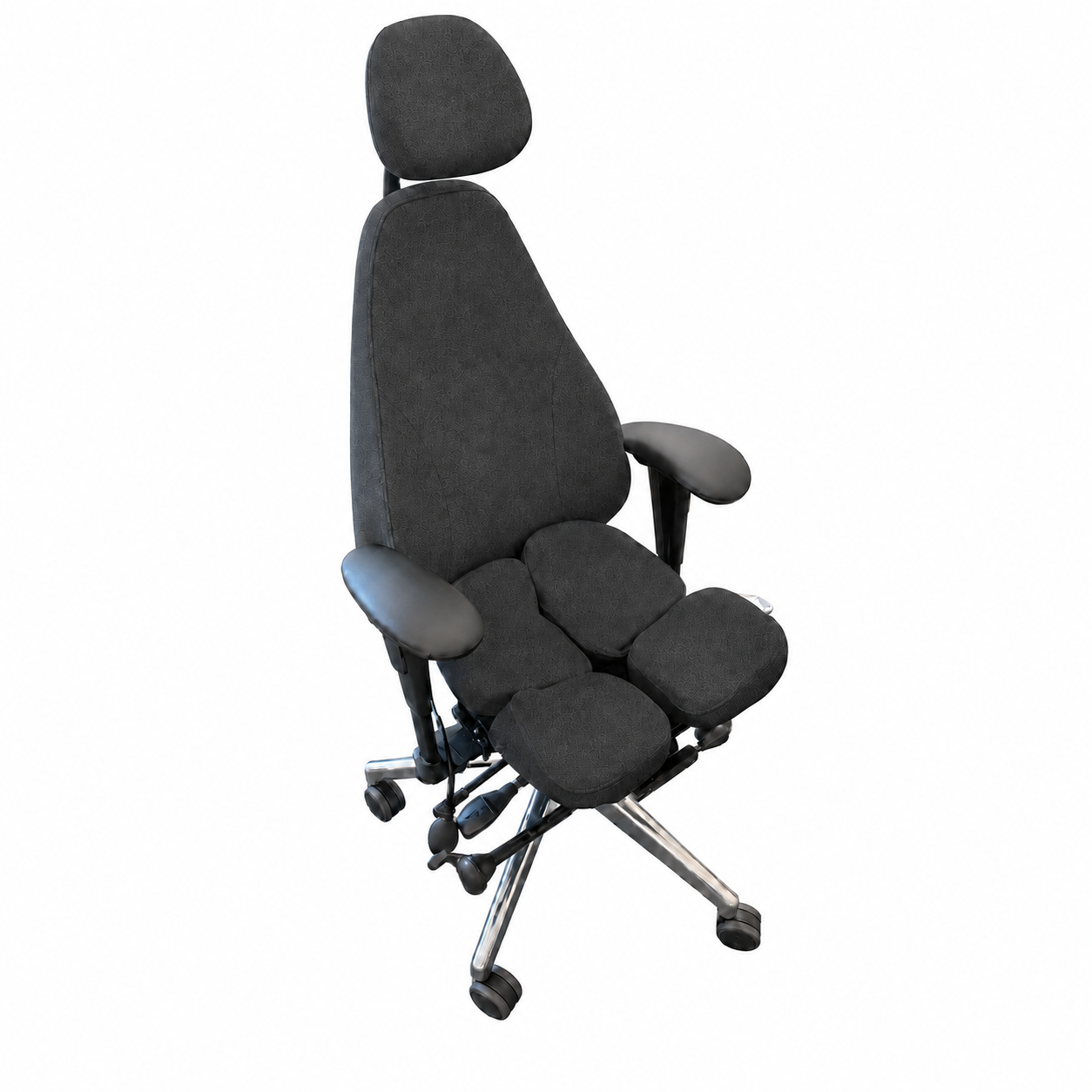
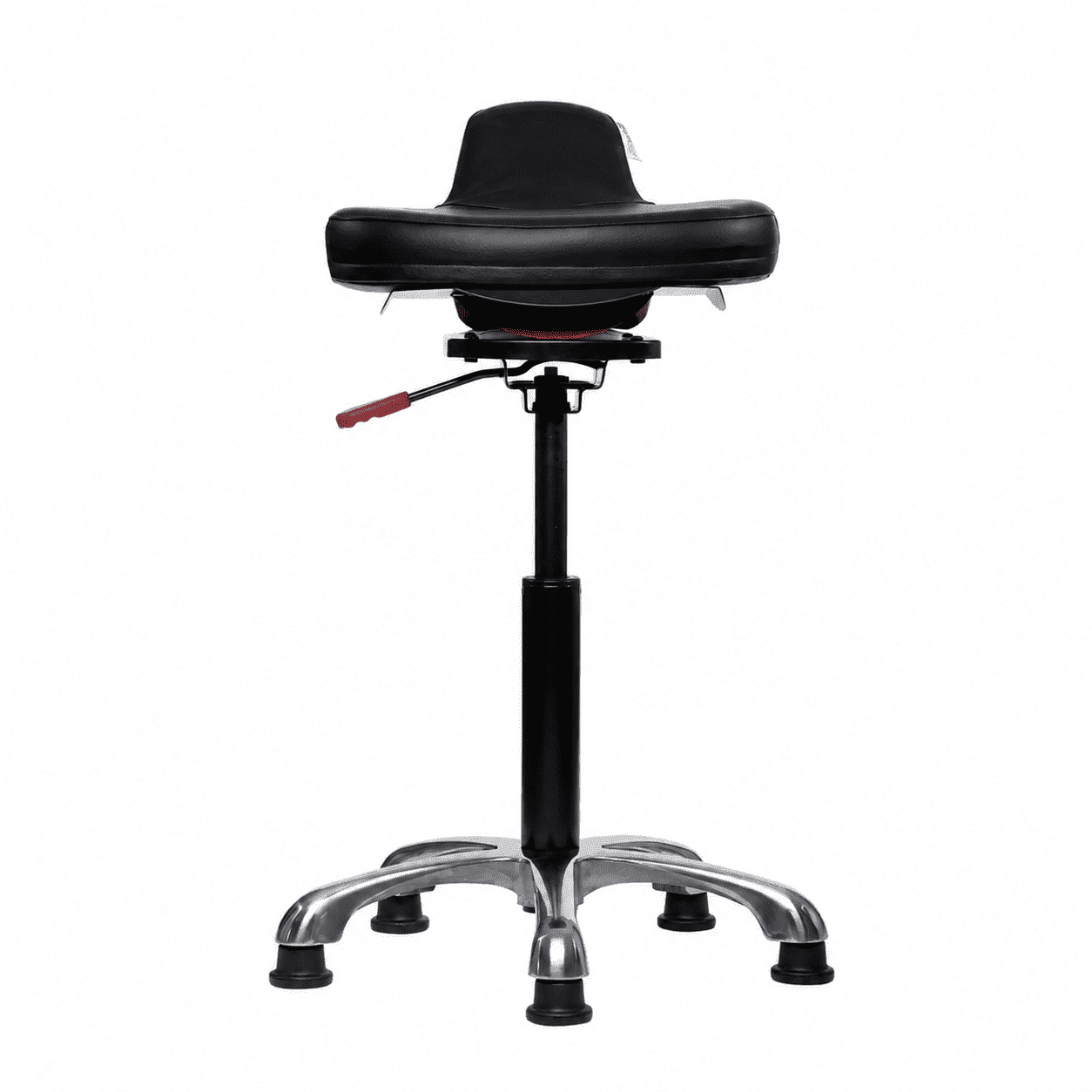
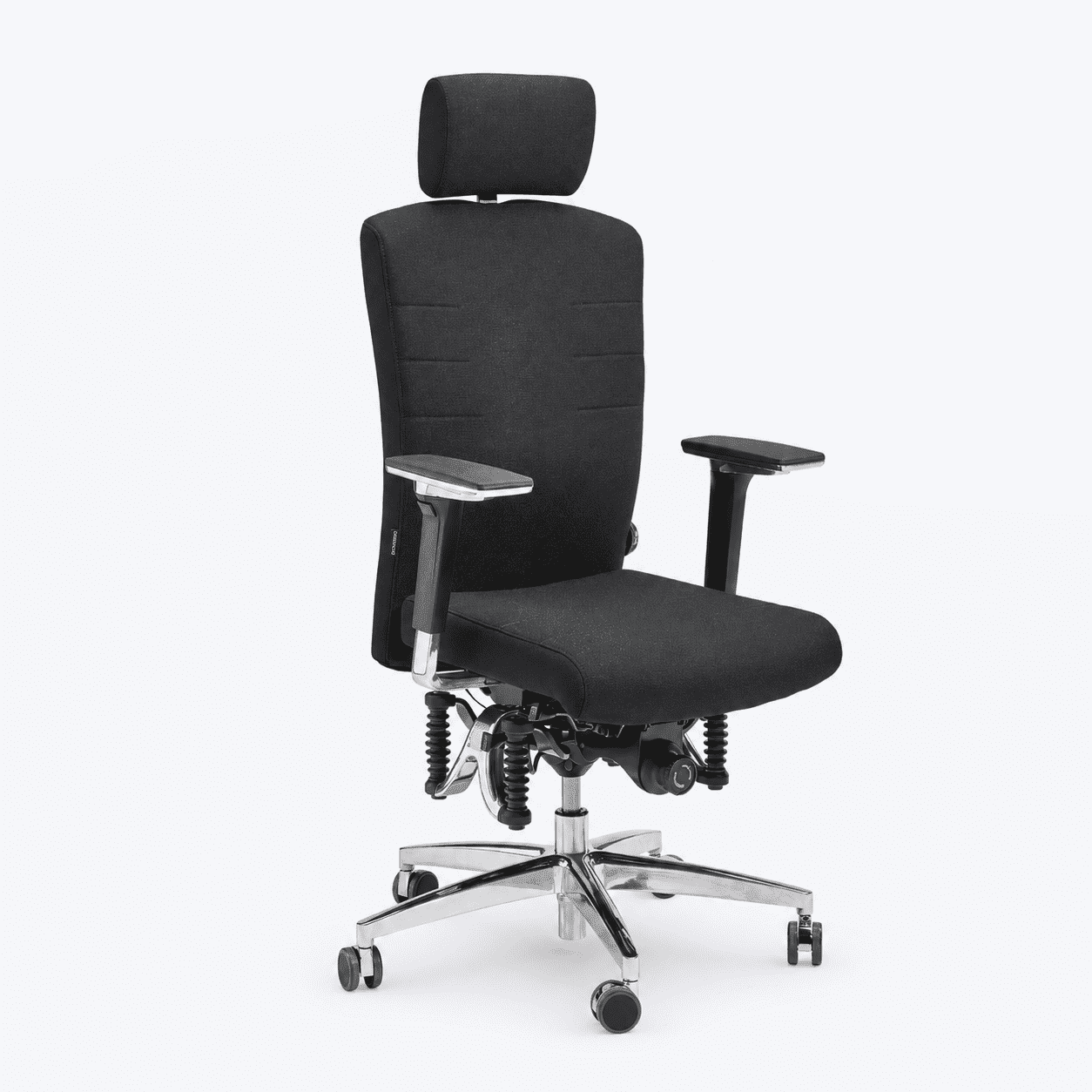
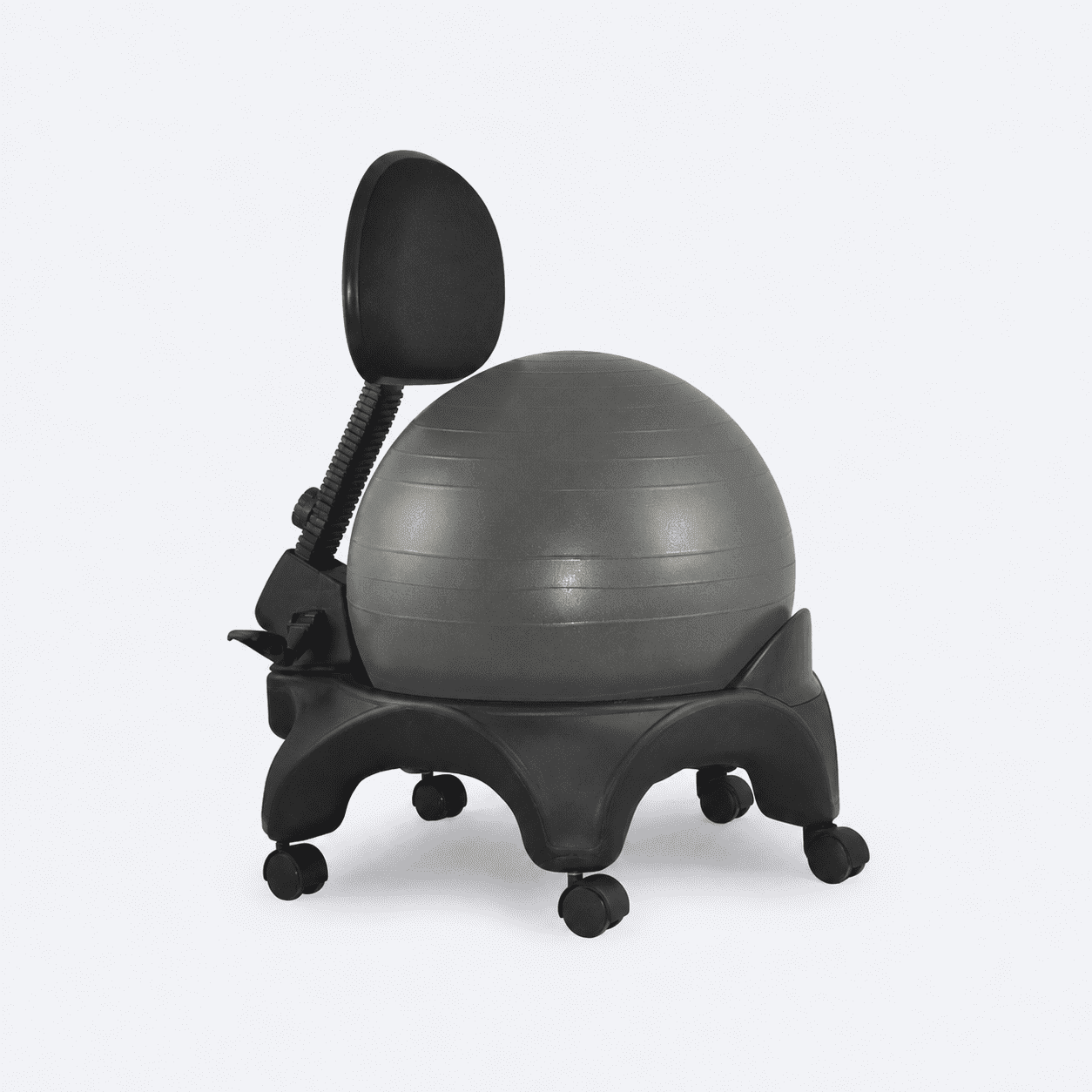
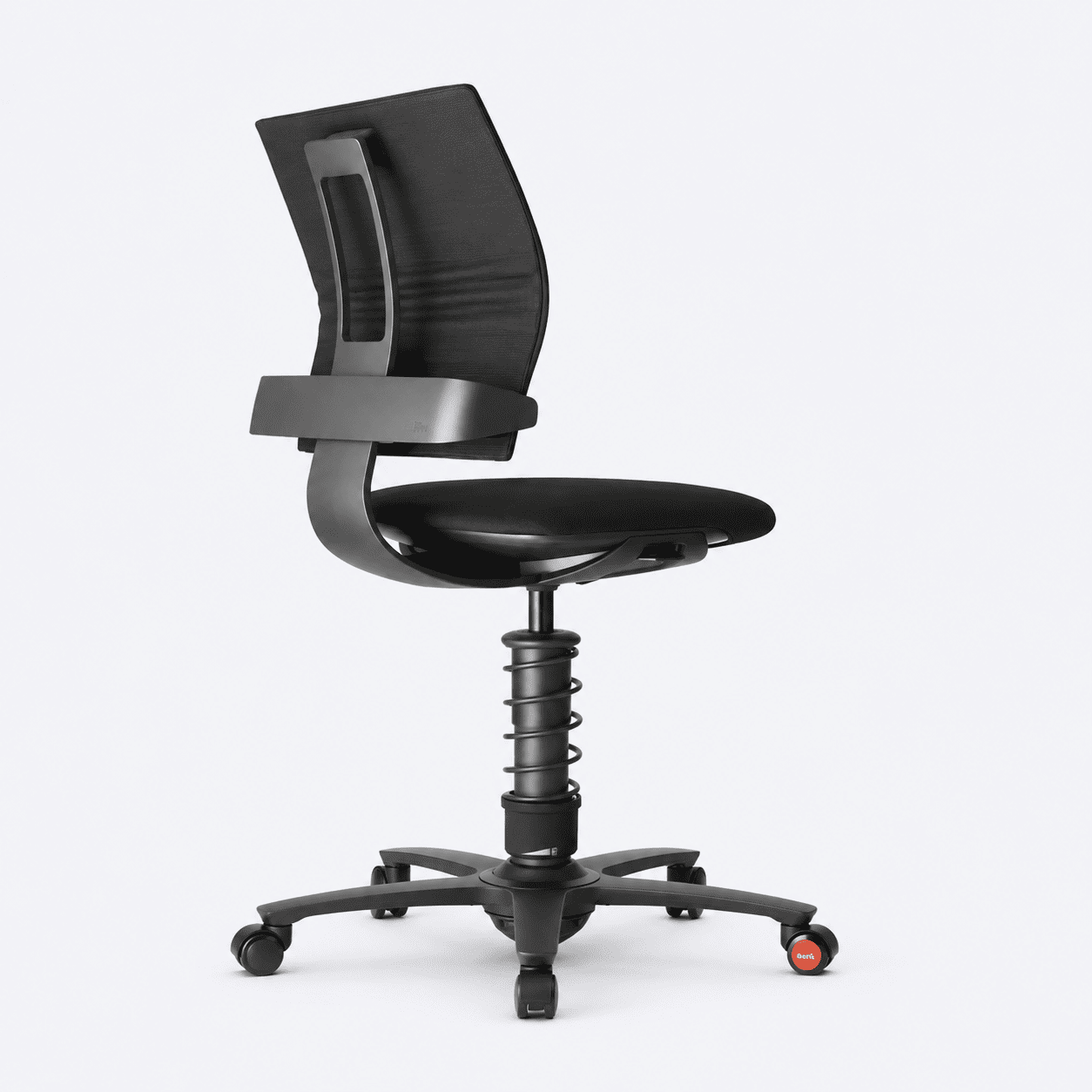
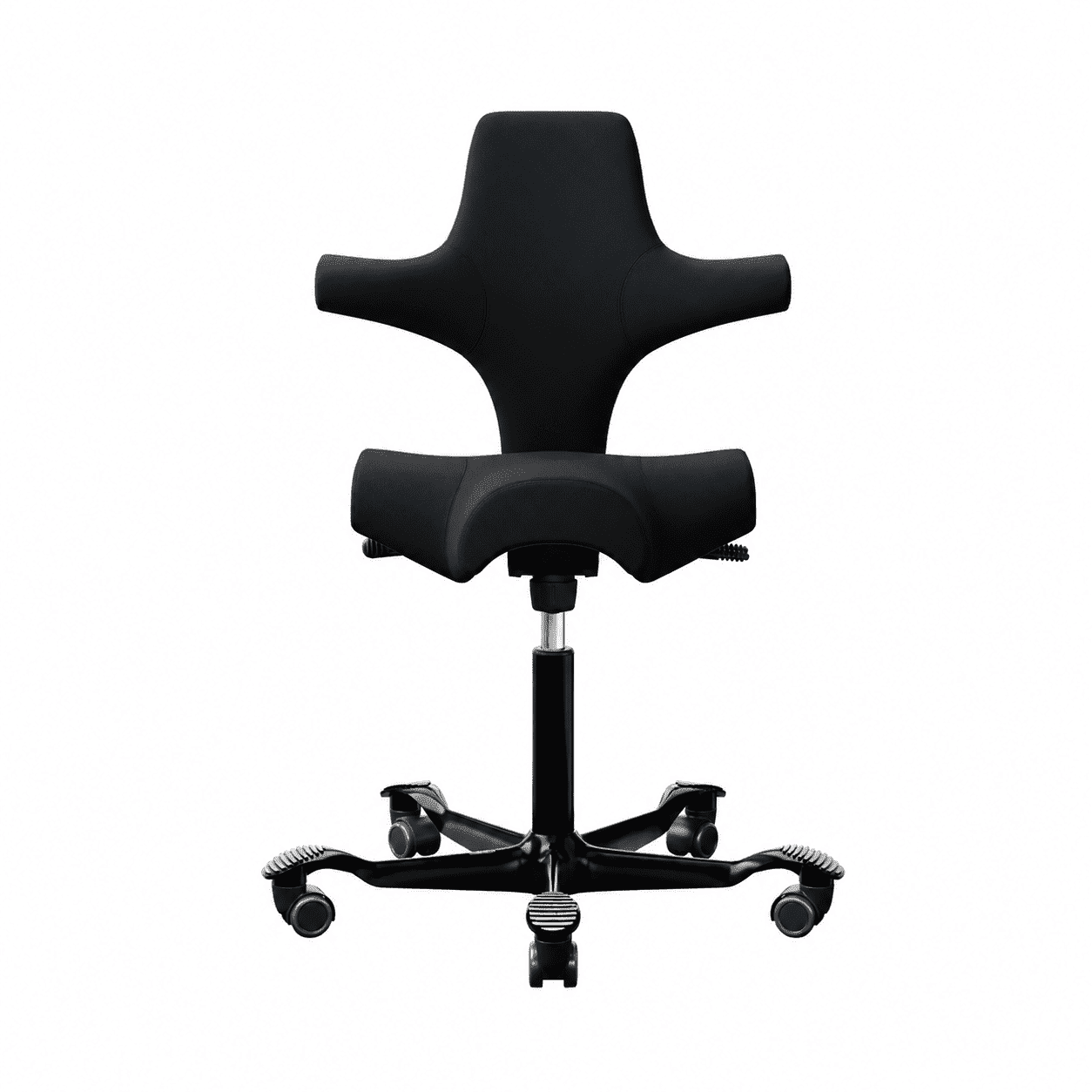
Six Architectures, Six Price Points
However, price is not part of the SBNFA™ score, but it is a useful reference for positioning devices with very different architectures, features, and markets.
| Device | Dominant architectural principle | SBNFA™ score | Observed indicative price* |
|---|---|---|---|
| Boréal–Aporia—prototype | Four independent seat quarters on a curved base | 3.75/4 | Prototype—retail price not yet set |
| Haider Bioswing 560 iQ | Pendulum suspension beneath a padded platform | 2.62/4 | Approximately €2,700 including VAT |
| QOR360 The Ariel 2.0 | Multidirectional rocker beneath a short seat | 2.37/4 | Starting at US$525, excluding French import costs and taxes |
| Aeris 3Dee | 3D vertical spring, movable seat and backrest | 2.08/4 | Approximately €959 including VAT |
| Tonic Chair Confort | Inflatable ball contained in a wheeled base | 1.89/4 | Approximately €215 including VAT |
| HÅG Capisco 8106 | Multi-position saddle with sagittal tilt | 1.76/4 | Approximately €1,095 including VAT |
* Indicative retail prices recorded in August 2026 for a typical configuration. Prices may vary by upholstery, options, country, shipping costs, and promotions. The U.S. price of the Ariel 2.0 is not directly comparable with French prices including VAT.
Functional Ranking—SBNFA™ Framework Part III V14_GPT, August 25, 2026
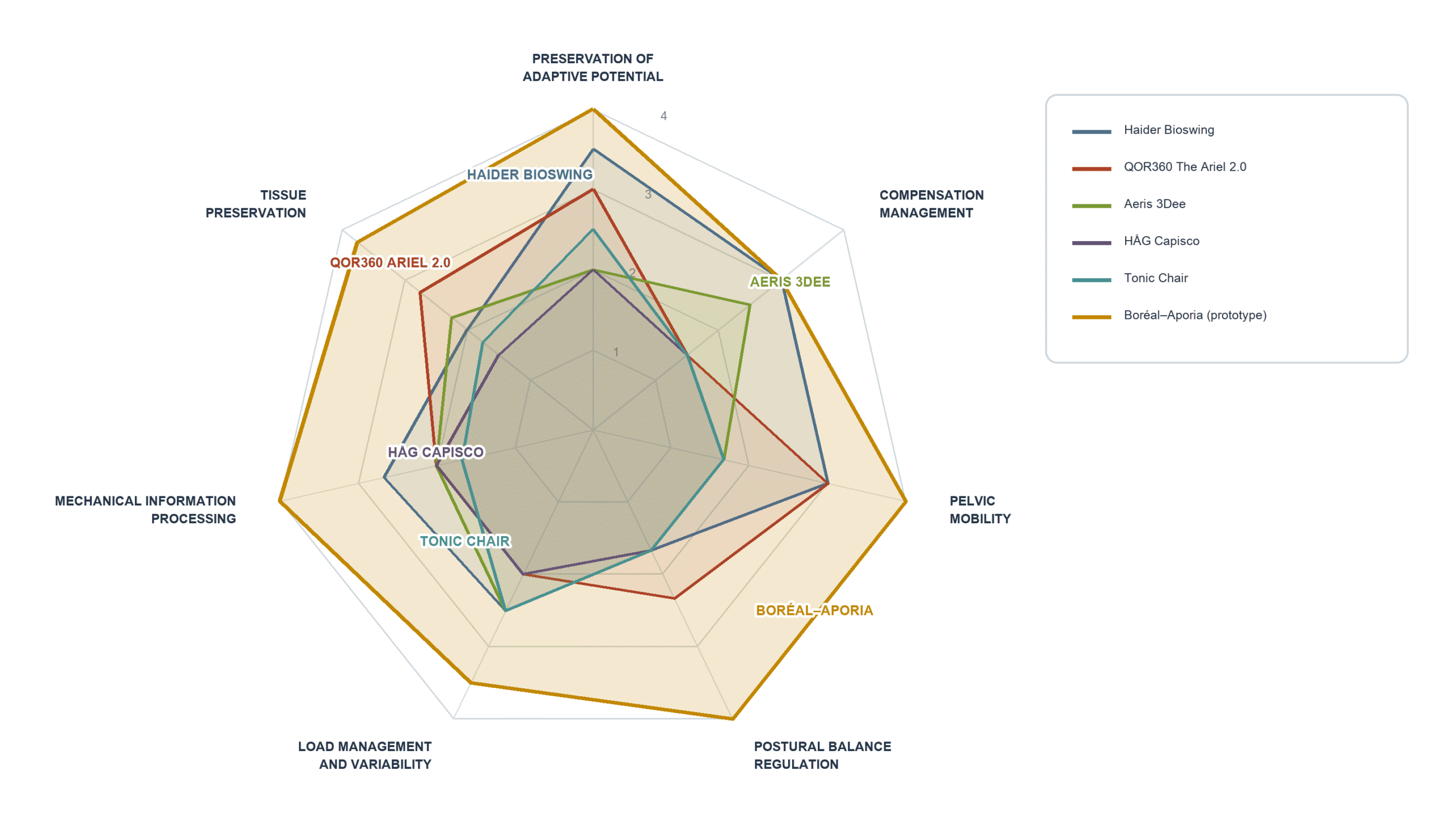
| Rank | Device | Adaptability | Compensations | Mobility | Balance | Loads | Information | Preservation | Overall score |
|---|---|---|---|---|---|---|---|---|---|
| 1 | Boréal–Aporia—prototype | 4.00 | 3.00 | 4.00 | 4.00 | 3.50 | 4.00 | 3.75 | 3.75 |
| 2 | Haider Bioswing 560 iQ | 3.50 | 3.00 | 3.00 | 1.67 | 2.50 | 2.67 | 2.00 | 2.62 |
| 3 | QOR360 The Ariel 2.0 | 3.00 | 1.50 | 3.00 | 2.33 | 2.00 | 2.00 | 2.75 | 2.37 |
| 4 | Aeris 3Dee | 2.00 | 2.50 | 1.67 | 1.67 | 2.50 | 2.00 | 2.25 | 2.08 |
| 5 | Tonic Chair Confort | 2.50 | 1.50 | 1.67 | 1.67 | 2.50 | 1.67 | 1.75 | 1.89 |
| 6 | HÅG Capisco 8106 | 2.00 | 1.50 | 1.67 | 1.67 | 2.00 | 2.00 | 1.50 | 1.76 |
Reading the scores:
- 3.5 to 4: strong functional response;
- 2 to under 3.5: partial response;
- under 2: weak response.
More specifically, the values derive from the 19 variables scored and substantiated in the harmonized monographs of the SBNFA™ framework—Part III V14_GPT. Therefore, the ranking is based on the equally weighted average of the seven functions; the raw total out of 76 is retained solely for traceability.
5. Key Lessons from the Benchmark
The benchmark does not simply rank chairs as more or less mobile. In other words, it reveals the architectural traps that prevent available movement from becoming true natural dynamic balance.
5.1 The Balance Trap—Movement Does Not Mean Balance
In practice, most so-called dynamic chairs allow users to move away from their equilibrium position without freely stabilizing the posture reached. Therefore, away from that point, the body must expend functional energy to resist imbalance.
The Tonic Chair retains moderate instability and pneumatic deformation, but its frame widens the base of support and limits ball rolling. Boréal–Aporia, by contrast, changes the principle: it creates a continuous space supporting consistently balanced oscillations up to ±50°, within which users can move freely from one stable posture to another.
5.2 What Makes the Ariel 2.0 Unique—Freeing the Hips Without Separating Buttock Supports
For example, with a score of 2.37/4, the QOR360 The Ariel 2.0 ranks third in the sample and second among commercially available chairs. In addition, its RedRocker® mechanism allows substantial overall pelvic mobility, while its short seat leaves the thighs largely unrestricted.
As a result, the two hip joints and both hip-to-ankle chains retain far greater functional freedom than enveloping chairs provide. However, the seat remains one piece: both buttock supports remain linked, and the sacroiliac joint receives no independent right-to-left mechanical response.
5.3 What Makes the Bioswing Unique—The Finest Overall Response
With 2.62/4, the Bioswing leads the commercially available chairs. Moreover, its pendulum mechanism responds to the smallest inputs, accompanies micromovements, and scores highly for adaptability, compensations, mobility, and mechanical information feedback.
In contrast, it differs from the Ariel 2.0 through a finer suspension beneath a larger supporting surface: the Bioswing accompanies the body more closely, whereas the Ariel frees the hips more extensively. The Bioswing nevertheless remains one piece: its response is global, and right-to-left inputs cannot be processed independently.
5.4 Contained-Ball Paradox—More Stable, but Far Less Mobile
Importantly, the Tonic Chair is not a free exercise ball: its frame widens the base of support and greatly limits rolling, translations, and tilting. As a result, users describe a seat that remains slightly unstable and engages the core, but tests demonstrate neither large pelvic excursions nor three-dimensional mobility comparable with a free Swiss ball. Its comparative score is 1.89/4.
5.5 Capisco Trap—A Variety of Positions Is Not Adaptability
The Capisco allows several sitting configurations and facilitates transitions among high sitting, conventional sitting, and semi-standing. However, this versatility is not, in itself, an SBNFA™ function.
Therefore, its architecture remains primarily static, and its mobility is mainly sagittal. It therefore responds weakly to the needs for compensation, three-dimensional pelvic mobility, and local load variability during prolonged sitting.
5.6 One-Piece Seat Trap—Global Mobility That Couples the Body
The Ariel 2.0, Bioswing, 3Dee, Capisco, and ball chair rely on a single supporting surface or centralized mechanism. For example, when one side of the pelvis acts, the mechanical response is transmitted across the entire seat. Consequently, the chair can move without respecting the functional independence of the body’s two sides.
Nevertheless, the Ariel 2.0 greatly reduces peripheral restrictions by freeing the thighs and hips, but its buttock platform remains one piece. In addition, this coupling limits right-to-left dissociation, localized processing of inputs, and the asymmetrical adaptations users need.
5.7 Pressure-Variability Trap—Shifting a Load Is Not the Same as Processing It Locally
Similarly, dynamic chairs vary support because the user or the entire seat moves. For this reason, this global variation guarantees neither successive unloading of each area nor local alternation between compression and decompression.
As long as the supporting surface operates as one unit, a local input cannot receive a truly differentiated response.
5.8 What Boréal–Aporia Reveals—A Difference in System, Not Merely Performance
In fact, natural dynamic balance does not depend on a single capability. It results from the coordinated operation of the seven functions evaluated by the SBNFA™ framework: adaptability, compensation management, pelvic mobility, postural balance regulation, load management and variability, mechanical information processing, and tissue preservation.
The Bottleneck in the Five Commercially Available Chairs
In practice, most dynamic chairs introduce movement by creating instability around a central position: the body can move away from it but must recruit resources to control or correct the imbalance.
The Ariel 2.0 partly avoids this trap through its short seat, which largely frees the hips. This freedom nevertheless meets a mechanical bottleneck: both buttock supports converge on one platform, loads cannot be dissipated locally, and both sides of the pelvis remain coupled. Therefore, the sacroiliac joint does not regain independent right-to-left function.
In different forms, each of the five commercially available chairs is therefore missing something: stability during movement, segmental freedom, separation of supports, or local load processing. None frees the system as a whole.
What Boréal–Aporia’s Segmented Architecture Changes
By comparison, Boréal–Aporia does more than increase movement amplitude or variety. Its four independent seat quarters—front right, front left, rear right, and rear left—can process inputs locally, separate supports in both planes, and accompany three-dimensional pelvic mobility.
Moreover, its central innovation is a continuous space supporting consistently balanced oscillations up to ±50°, with functional economy: an adaptive space in which users can move freely from one stable posture to another.
Boréal–Aporia is the only evaluated device to jointly free all seven functions required for natural dynamic balance.
5.9 The Central Lesson—Making the Chair Move Is Not Enough
Ultimately, the five commercially available chairs allow certain movements, favor one direction, or support a specific function. However, they add mobility to sitting while retaining an overall architecture that does not free the entire functional system.
In contrast, Boréal–Aporia changes the principle: it seeks to preserve all seven functions on which natural dynamic balance depends.
6. Sales Messaging
Boréal–Aporia is the only evaluated chair to combine a strong, broad functional response across all seven SBNFA™ functions within a single architecture—while commercially available chairs provide partial responses or concentrate on only a few functions.
6.1 Evidence—SBNFA™ Benchmark Part III V14_GPT, August 25, 2026
- Coverage of all seven functions: Boréal–Aporia achieves a comparative score of 3.75/4, versus 2.62/4 for the top commercial comparator, the Haider Bioswing 560 iQ.
- Particularly wide gaps: balance at 4.00 versus 2.33 for the Ariel 2.0; mechanical information at 4.00 versus 2.67 for the Bioswing; tissue preservation at 3.75 versus 2.75 for the Ariel 2.0; and adaptability at 4.00 versus 3.50 for the Bioswing.
- Novel architecture: four independent seat quarters—front right, front left, rear right, and rear left—versus a single supporting surface or centralized mechanism in all five comparators.
6.2 Key Benefits
Seven functions freed together—Boréal–Aporia does not favor one type of movement; its architecture is designed to preserve the coordinated operation of the entire system.
Balanced mobility—A continuous space of consistently balanced oscillations up to ±50°, whereas ball chairs and rocking seats offer a far narrower balance space.
Localized response—Each seat quarter responds independently, providing a response proportional to each input rather than a global seat adjustment.
Functional economy—Users can move from one stable posture to another without having to sustain an imbalance imposed by the chair.
6.3 Responses to Objections
“Why is it more expensive?” Four independent seat quarters and seven functions freed within one architecture: this is a change of system, not simply a more mobile chair.
“The Ariel 2.0 already frees the hips very effectively.” Yes, but its buttock platform remains one piece: it frees the hip joints without mechanically separating the two sides of the pelvis.
“The Bioswing is already highly dynamic.” Yes, but its mechanical response remains global and is transmitted across the entire seat. Boréal–Aporia separates all four quarters, front-to-back and right-to-left.
“We’re waiting for user feedback.” The SBNFA™ benchmark, based on 19 variables, already establishes a clear functional gap. In addition, these results will be supplemented by experimental measurements scheduled with the GIBOC laboratory in 2027.
7. Conclusion
What dynamic chairs lack is not more movement. It is an architecture capable of preserving all the conditions required for natural dynamic balance at the same time.
Overall, most dynamic chairs move the body away from a central position at the cost of instability and functional effort. The Ariel 2.0 frees the hips remarkably well, but the permitted movements encounter a one-piece buttock support: loads concentrate at this bottleneck, and the sacroiliac joint remains deprived of an independent right-to-left mechanical response.
This is ultimately the limitation shared by the five commercially available chairs, in different forms: they free certain movements but always retain a constraint elsewhere in the system—instability, coupled supports, concentrated loads, or sacroiliac restriction.
By contrast, Boréal–Aporia removes all these constraints at once. As a result, its continuous space of balanced oscillations allows the body to move without fighting imposed instability. Its four independent seat quarters prevent adjustments from meeting a one-piece surface: each input can remain localized, each side of the pelvis can act independently, and loads can be redistributed and dissipated.
Discover and Try Boréal–Aporia
Discover the architecture that preserves all seven functions of natural dynamic balance together.
Discover Boréal–Aporia →Explore More on Blue Portance
- Understanding the SBNFA™ Framework
The seven functions used to analyze a seat’s compatibility with natural dynamic balance. - Static Ergonomics: A Misleadingly Good Idea?
Why imposing a posture is not enough to preserve the body’s adaptability. - Micromovements and Sitting
The role of ongoing adjustments in mechanical variability. - Prolonged Sitting and Mechanical Variability
How load renewal contributes to tissue preservation.
Sources and Method
- Part I of the SBNFA™ Framework: scientific and methodological framework.
- Part II of the SBNFA™ Framework: scoring methodology.
- Harmonized monographs—Part III: comparative evaluation of the six devices under the SBNFA™ framework.
- Evaluation Summary: consolidated results, ranking, and functional profiles.
The results of this benchmark will be supplemented by experimental measurements planned with the GIBOC laboratory at the Institute of Movement Sciences during the first half of 2027.
