


Why knee pain can originate from the pelvis — and how your brain sometimes misinterprets these signals?
Do you experience pain when sitting despite normal medical results? Understand the role of fascia, tensegrity and micro-movements in the origin of these conditions.
Summary — Fascia is far more than simple wrapping tissue. It forms a living network capable of distributing mechanical forces, enabling tissue gliding, and maintaining constant dialogue with the nervous system. When this system loses its adaptive capacity — particularly during prolonged sitting — forces concentrate, gliding decreases, and pain can emerge even without any visible injury on imaging. This article explains fascial mechanisms, the causes of their dysfunction, and why restoring micro-movements is essential to achieving lasting balance.
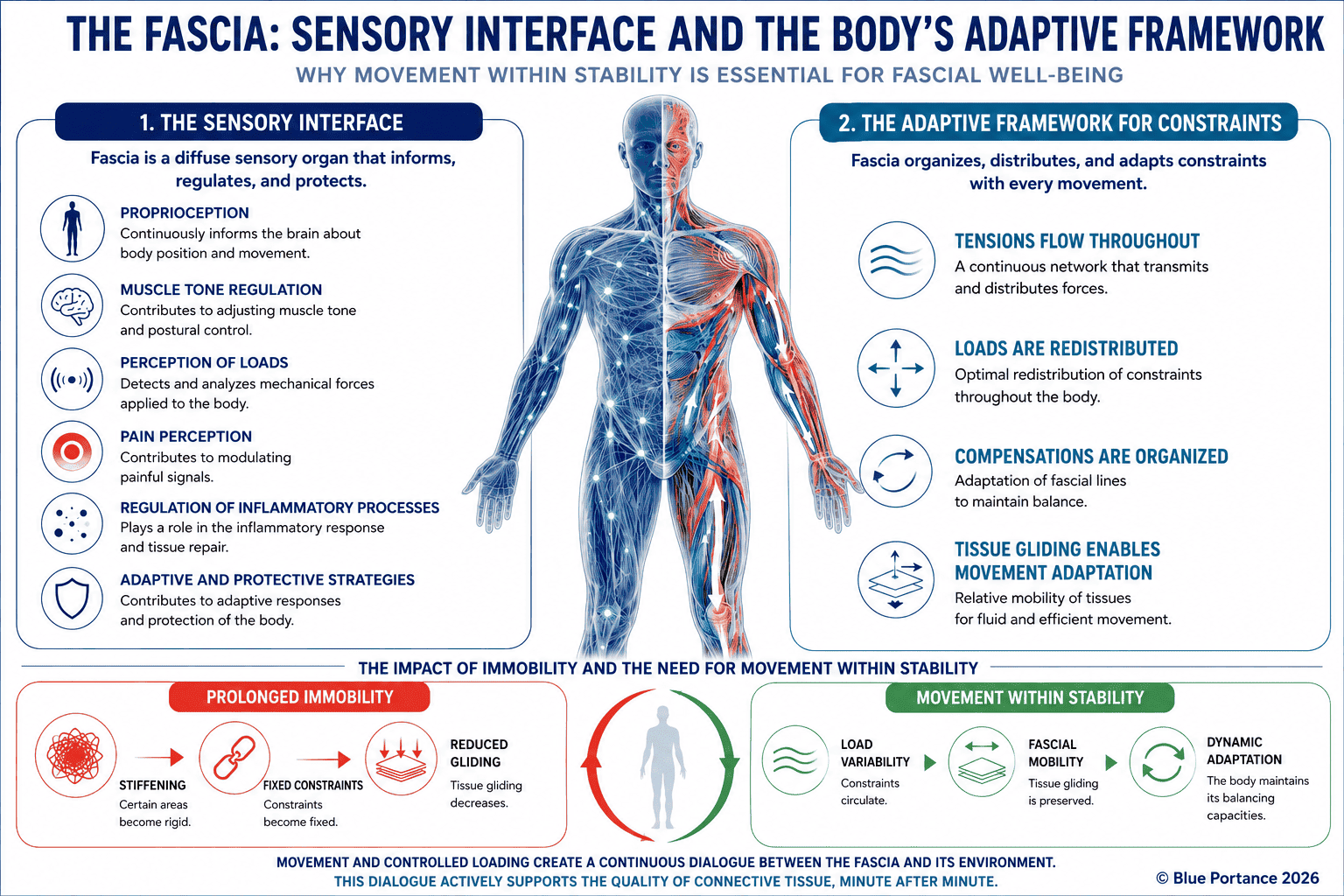
1. Fascia: the invisible network connecting your entire body
Knowing the composition of fascia is not enough on its own. To understand how this network truly governs the body, we need to observe the two principles that drive its function: tensegrity and neuro-sensory dialogue.
1.1. A continuous, nested structure throughout the body
To understand how fascia regulates mechanical forces and interacts with the neuro-sensory system, we must first examine its structure: how it is organized, and what it is made of.
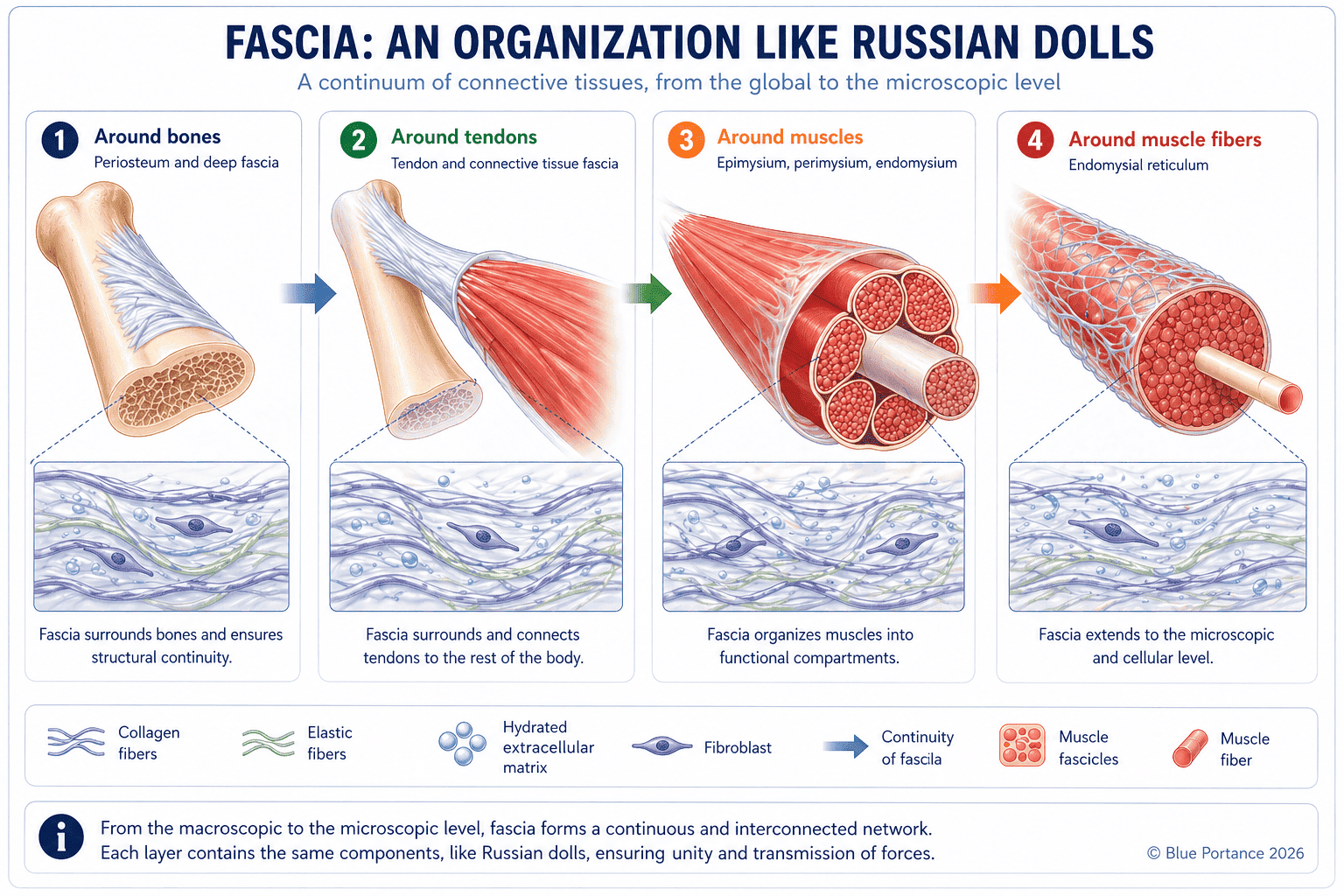
Fascia is not a simple uniform tissue. It forms a continuous three-dimensional network that envelops, connects and interpenetrates every structure of the body, from the surface of the skin down to the cellular level.
This organization can be visualized as a system of nested layers: fascia wraps around bones (periosteum), envelops tendons (tendon sheaths), encloses muscles (epimysium, perimysium, endomysium), and extends down to each individual muscle fiber (endomysial reticulum). Each layer contains the next — forming a structural continuum without any true interruption.
This structural continuity means that a mechanical event — a compression, a tension, a constraint — is never truly localized. It inevitably propagates through the fascial network to distant structures, sometimes far from the initial point of application.
1.2 The main categories of fascia
Before examining the internal composition of fascia, it is helpful to distinguish its main anatomical categories, which differ in location, thickness and primary function:
| Category | Location | Primary functions |
|---|---|---|
| Superficial fascia | Below the skin, above the muscles | Thermal insulation, fat storage, skin gliding, lymphatic drainage |
| Deep fascia (epimysium, aponeuroses) | Muscle sheaths, intermuscular septa | Force transmission, load distribution, proprioception |
| Visceral fascia (mesenteries, peritoneum, pericardium…) | Around and between internal organs | Organ suspension and mobility, vascular-neural protection |
| Meningeal fascia (dura mater, pia mater…) | Central and peripheral nervous system | Mechanical protection, CSF circulation, continuity with deep fascia |
After Stecco, C. (2015). Functional Atlas of the Human Fascial System. Elsevier.
1.3 The fundamental components of fascia: a three-level internal mechanics
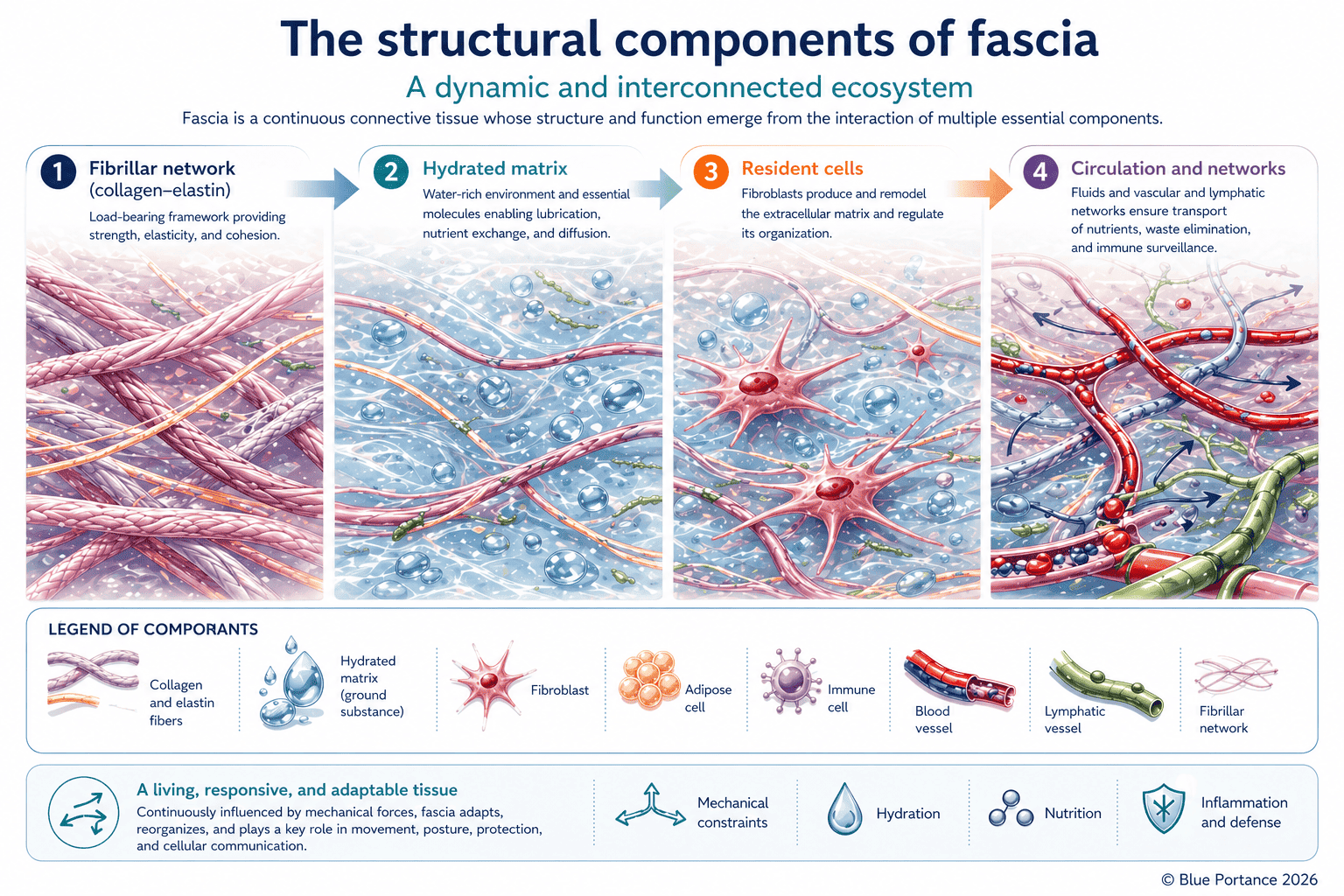
Beyond its structural organization, fascia is composed of three interdependent elements that together explain its mechanical and biological properties.
A. The extracellular matrix — the “lubricating gel” enabling gliding
The extracellular matrix (ECM) is the aqueous environment in which all fascial structures are immersed. It is composed primarily of hyaluronic acid, proteoglycans and water. It is this component that gives fascia its viscoelastic properties: capacity for deformation, energy absorption, and — when functional — tissue gliding.
This is comparable to what happens in fascia: a well-hydrated extracellular matrix facilitates smooth gliding, while dehydration contributes to the onset of stiffness and discomfort.
B. The fibers — the “intelligent armature” that adapts to load
The fibrillar network is composed of two main types of fibers:
- Collagen fibers — provide resistance to traction; they orient themselves along the lines of force habitually applied to the tissue.
- Elastic fibers — provide extensibility and the capacity to return to rest after deformation.
This fibrillar network is not static: it continuously remodels itself in response to the mechanical forces it receives, a property known as fascial mechanosensitivity (Schleip, 2003).
C. The cells — the “sensors and regulators” of the system
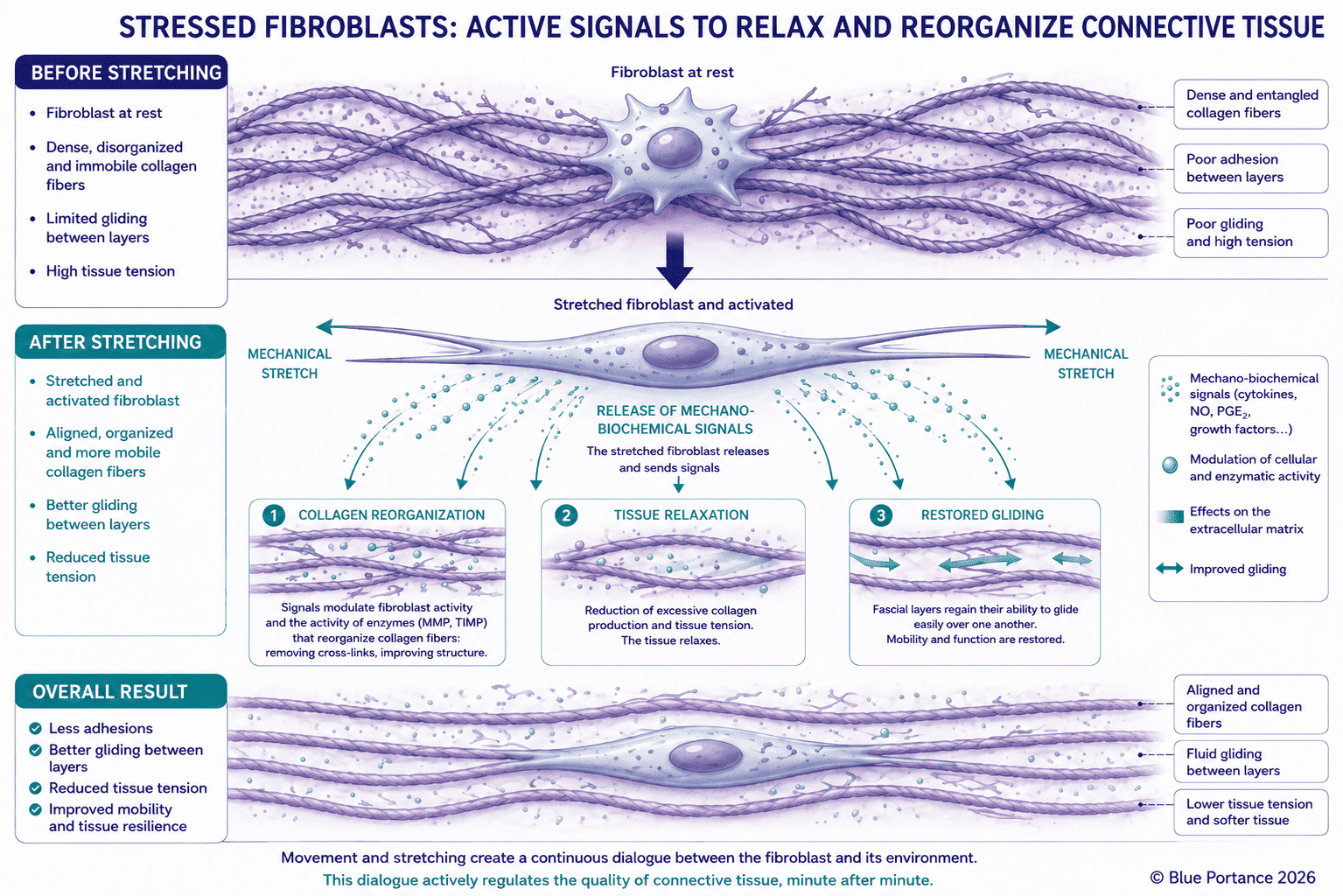
The main cellular population of fascia consists of fibroblasts — cells that produce and remodel the extracellular matrix and fibrillar network. They are also direct mechanosensors: when they detect mechanical deformation, they emit biochemical signals that modulate the quality and organization of the surrounding tissue.
Fascia also contains mechanoreceptors (Ruffini, Pacini, Golgi, free nerve endings) that continuously inform the nervous system about the state of mechanical forces applied to the body (Stecco, 2015).
D. A living organization capable of adaptation
Fascia is therefore not a passive “packaging” material, but a living and reactive system: the extracellular matrix ensures gliding and damping, the fibers provide a resistant and adaptable structure, and the cells (fibroblasts and mechanoreceptors) continuously regulate and inform the nervous system. This permanent interaction explains why fascia plays a central role in mobility, stability… and even the perception of pain.
Knowing the composition of fascia is not sufficient, however. To understand how this network governs the body’s organization, we must observe the two principles driving its function: tensegrity and neuro-sensory dialogue.
2. Fascia: the dynamic architecture of the human body
The fascial network does more than connect and support: it organizes, distributes and adapts the mechanical forces acting on the body according to two complementary operating principles.
A principle of structural balance enabling the body to absorb and distribute mechanical forces without rigidity.
A distributed signaling network through which fascia continuously informs the brain about the state of the body’s mechanical forces.
2.1. Tensegrity: the principle of balance without rigidity
A. Definition and origins of the concept
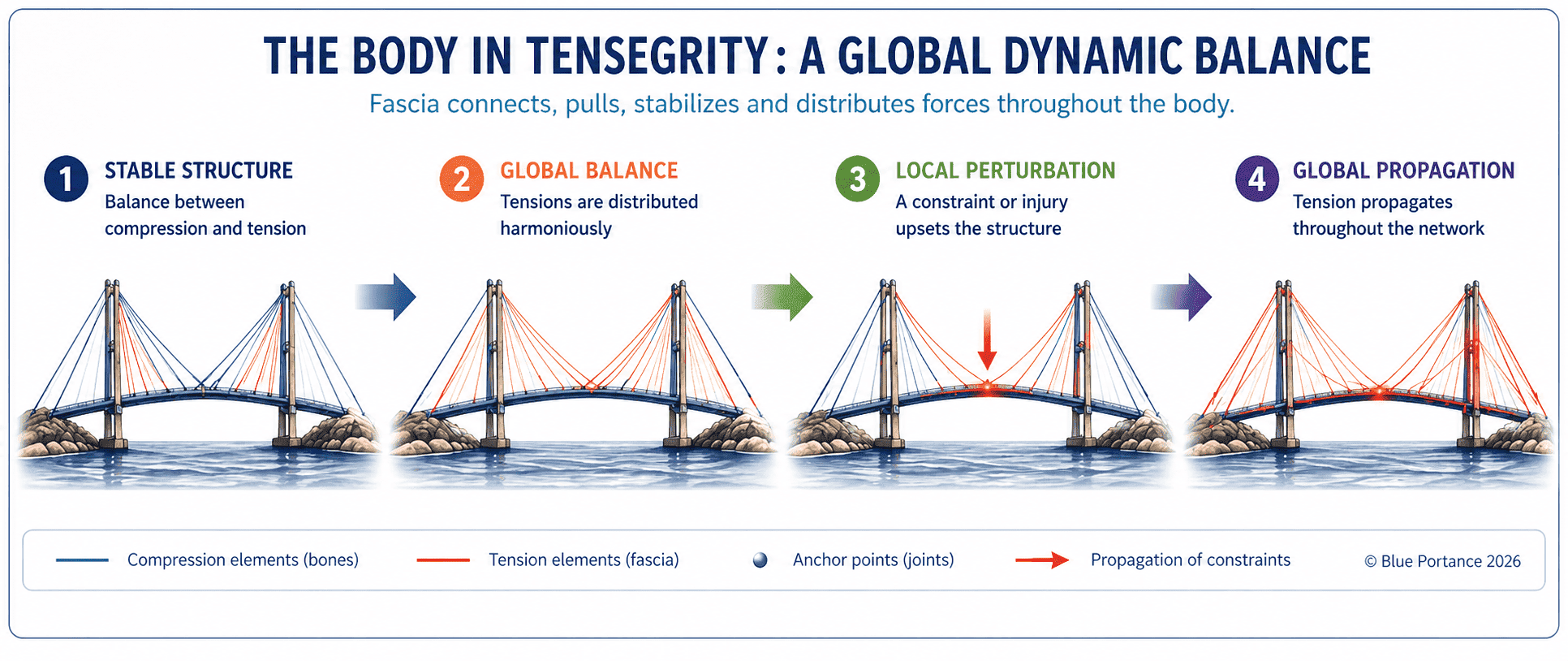
Tensegrity (a contraction of tension and integrity) is an architectural principle in which elements under tension (such as fascia) balance with elements under compression (such as bones), without any element bearing the entire load by itself.
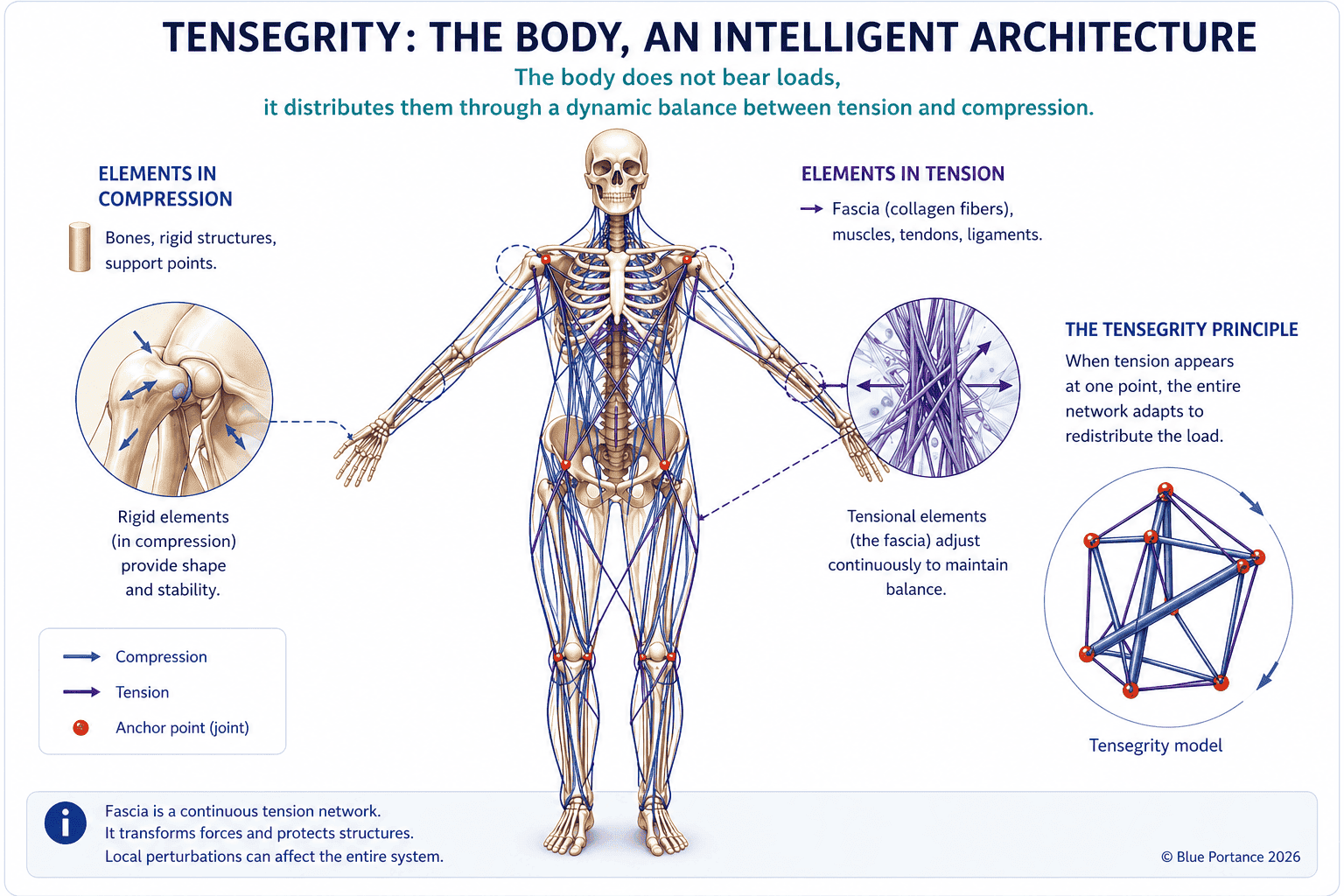
Originally developed by architect Buckminster Fuller, the concept was applied to biology by Ingber (1998), who demonstrated that living cells — and by extension the entire body — function according to this same principle of tensional integrity.
B. The three effects of tensegrity in the body
In fascia, tensegrity enables:
- Automatic redistribution of forces — any mechanical force applied to one point of the body is distributed throughout the fascial network, rather than concentrating at the point of application.
- Passive stability — the body maintains its structural integrity without continuous active muscular contraction.
- Adaptive capacity — the system self-adjusts in response to variations in load, without requiring conscious control.
C. Multi-scale application and clinical implications
This organization applies at different scales of living tissue, from the cell to macroscopic structures (Ingber, 1998). It implies that a mechanical constraint can never remain truly localized: it necessarily propagates through the fascial network.
This organization means that no part of the body is truly isolated.
This principle has inspired several contemporary models for analyzing movement and mechanical interactions between body structures (Myers, 2014).
But tensegrity alone does not explain everything. For the body to function as a truly self-regulating system, fascia must also be capable of informing the brain about the state of forces acting upon it — in real time.
2.2. The neuro-sensory network: when fascia “speaks” to the brain
A. Understanding the permanent dialogue between tissues and the brain
Fascia is not only a mechanical structure. It is one of the most densely innervated tissues in the body — and this innervation gives it a function that goes far beyond simple support.
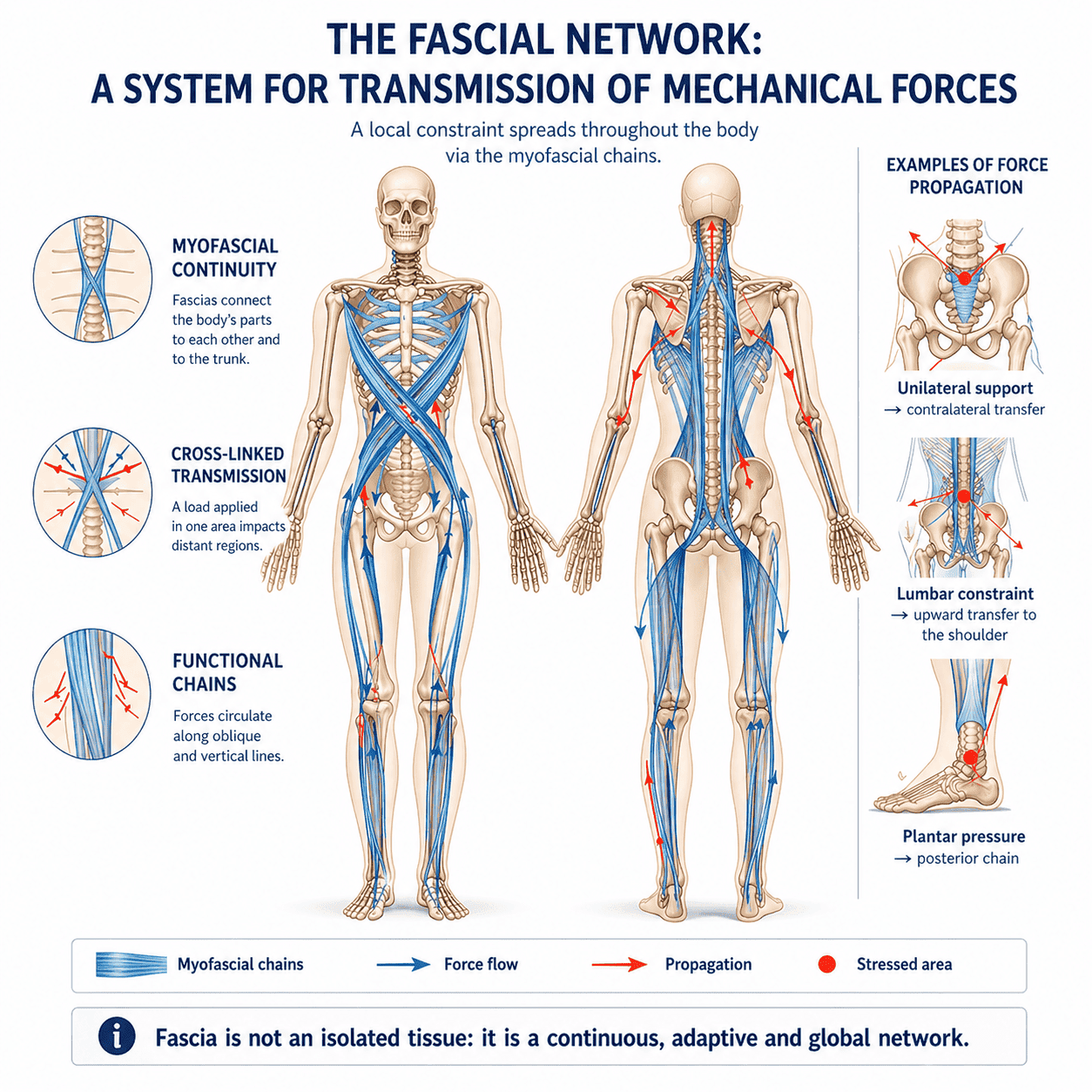
In fact, fascia does not merely transmit forces: it also transmits information. The connective tissue thus constitutes a distributed signaling network, in which perception and regulation do not centralize, but emerge from a permanent dialogue between the tissues and the nervous system.
B. Mechanoreceptors: ultra-sensitive sensors
Fascia contains four main types of mechanoreceptors, each specialized in detecting a specific type of mechanical signal:
| Receptor | Location | Signals detected | Main function |
|---|---|---|---|
| Ruffini endings | Superficial and deep fascia | Sustained mechanical deformation | Proprioception, postural regulation |
| Pacinian corpuscles | Deep fascia | Rapid vibrations and accelerations | Detection of rapid mechanical changes |
| Golgi bodies | Musculotendinous junctions | Tension, traction | Regulation of muscular tone |
| Free nerve endings | All fascial layers | Mechanical, chemical, thermal stimuli | Nociception, tissue protection |
Sources: Stecco, 2015 ; Schleip, 2012
C. Proprioception and pain: two faces of the same coin
The information transmitted by these mechanoreceptors continuously informs the brain about two complementary dimensions:
- Proprioception — the precise sense of body position in space, essential to postural control and movement coordination.
- Nociception — detection of potentially harmful mechanical or chemical signals, which the brain may or may not interpret as pain depending on context.
Fascia is not only a mechanical system of force transmission: it is an active interface between mechanics and perception.
These two functions — tensegrity and neuro-sensory dialogue — work simultaneously and in synergy. It is by observing the functions of this network that we fully grasp its role in the body’s organization.
3. Fascia as an organ of regulation and mechanical load harmonization
Beyond its structural role, fascia actively participates in regulating three fundamental functions: distributing mechanical forces, maintaining stability without effort, and protecting vulnerable structures.
3.1. Automatic redistribution of forces
A. Why forces never remain localized
When a mechanical force is applied to a specific region of the body, the fascial network automatically distributes this force across a large number of structures. This redistribution prevents any single anatomical zone from bearing the entire load.
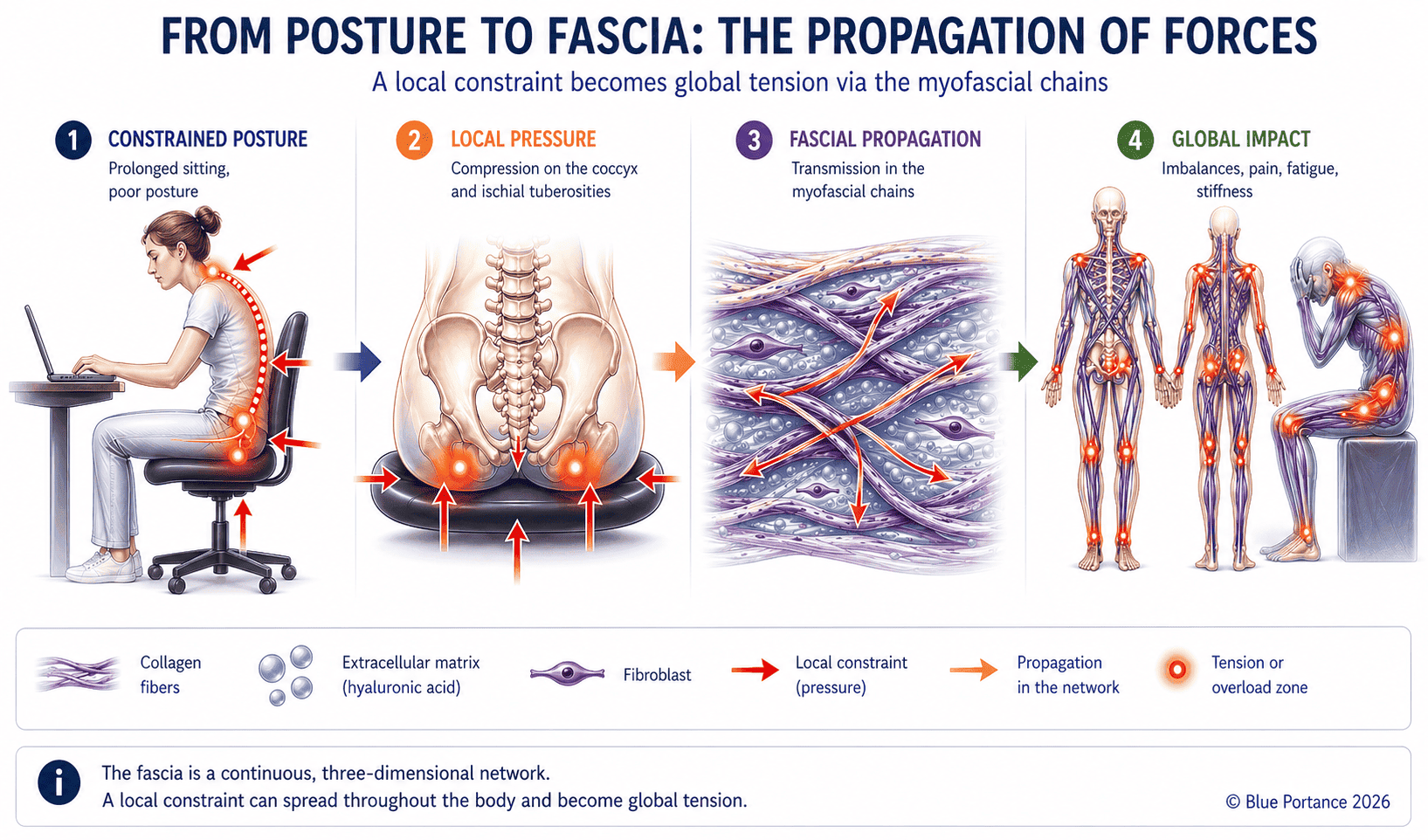
This mechanism has several concrete implications:
- A localized pain may originate from a distant mechanical imbalance.
- Treating only the painful area without addressing the source of the imbalance provides only partial or temporary relief.
- Restoring the global distribution of forces can reduce pain even in areas that have not been directly treated.
B. Hysteresis and force dissipation
When fascia deforms under the effect of a mechanical force, it does not simply transmit this force: it partially dissipates it as heat. This property, called hysteresis, plays a fundamental role in protecting anatomical structures from excessive loads.
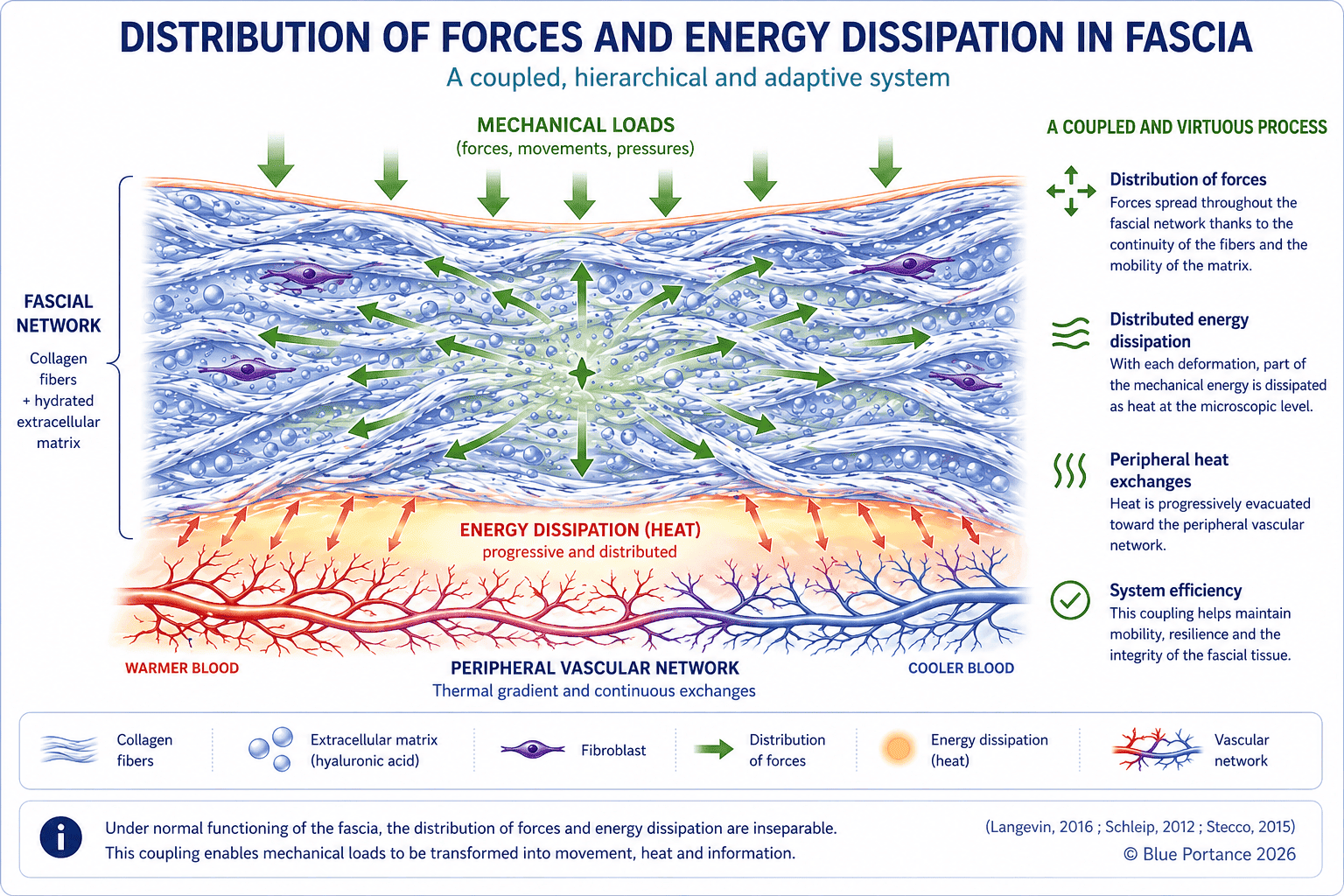
Hysteresis depends directly on the state of the extracellular matrix: a well-hydrated, mobile matrix dissipates forces effectively. A dehydrated, dense or adherent matrix progressively loses this dissipative capacity, increasing the risk of local force concentration (Langevin, 2021 ; Schleip, 2012).
3.2. Maintaining stability without conscious effort
Through tensegrity, the fascial network contributes to postural stability without requiring constant active muscular contraction. This capacity — known as passive stabilization — is governed by what Panjabi (1992) describes as the “neutral zone”: the range of motion within which spinal structures move without significant resistance from passive elements.
When this neutral zone is preserved, the body can maintain its equilibrium with minimal neuromuscular cost. When it is exceeded — due to a loss of fascial adaptability, for example — the active muscular system must compensate, at the cost of increased energy expenditure and accelerated fatigue.
3.3. Protection of sensitive structures
The fascial network also acts as a mechanical protection system for sensitive structures — in particular nerves and blood vessels. By distributing the forces acting on them, it prevents excessive compression or traction that could interfere with their function.
This protective function is particularly critical in the sitting position: when fascia loses its adaptive capacity, certain anatomical structures — ischial nerves, pudendal nerve, coccygeal plexus — may be subjected to excessive compression or traction, explaining specific pain patterns associated with prolonged sitting (Labat et al., 2008).
This system functions as long as it retains its adaptive capacity. But what happens when that capacity is impaired? That is what the next section examines.
4. When tensegrity and force harmonization are disrupted
When the fascial network loses its adaptive capacity — progressively, often imperceptibly — a cascade of consequences unfolds that can ultimately lead to chronic pain, even in the absence of any structural lesion visible on imaging.
4.1. Causes of imbalance
Before examining the details, here is what happens when the system loses its adaptive capacity.
A. Progressive loss of fascial gliding
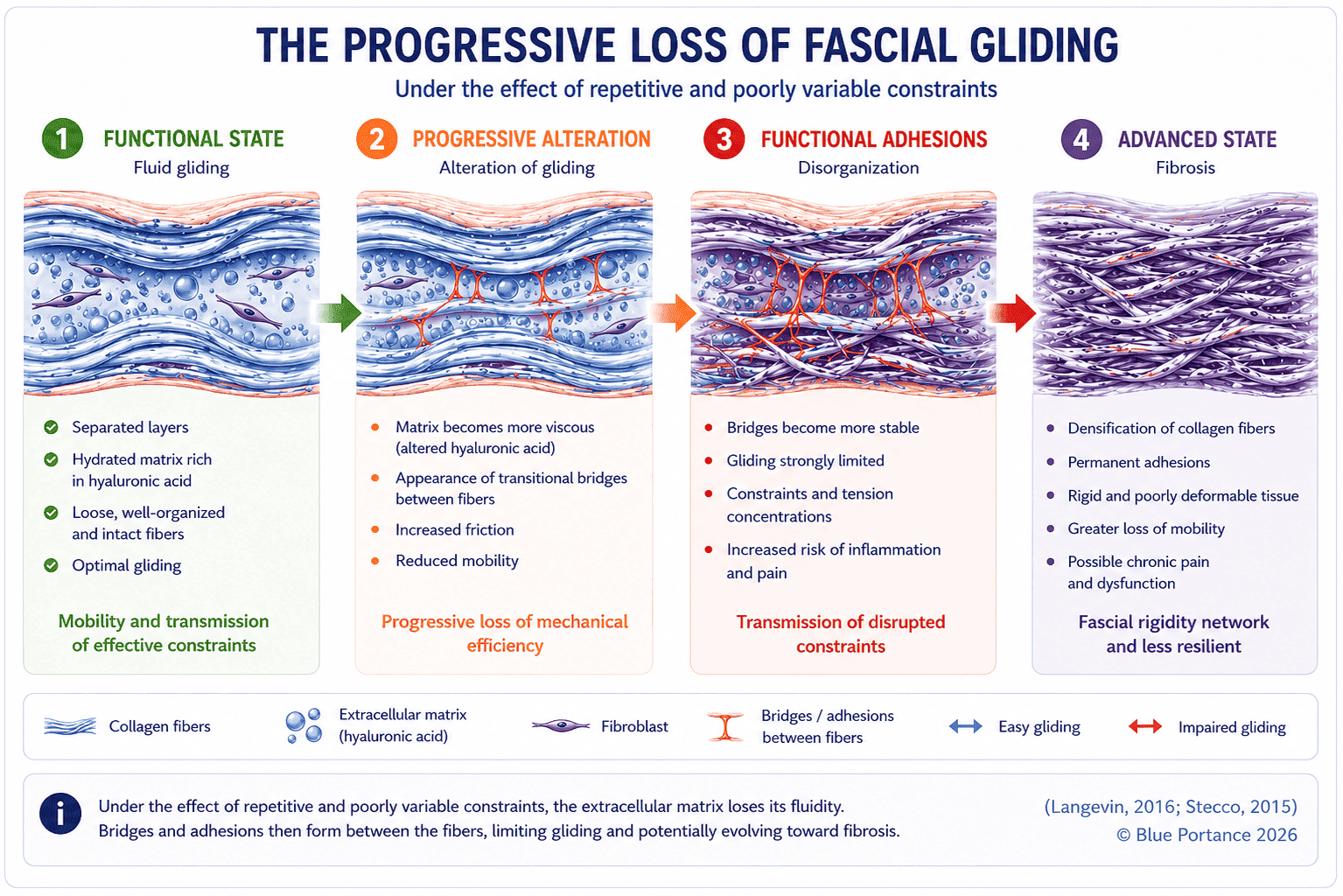
The main cause of fascial dysfunction is the loss of gliding capacity between fascial layers. This loss occurs when the extracellular matrix loses its fluid properties — generally due to repeated, poorly variable mechanical loads, such as those generated by prolonged sitting.
The process unfolds in 4 progressive stages: smooth gliding → transitional cross-links → functional adhesions → fibrosis. At each stage, the capacity for force redistribution decreases — while the risk of pain concentration increases (Langevin, 2021 ; Stecco, 2015).
B. Cellular response: fibroblast adaptation
At the cellular level, this change in mechanical behavior is accompanied by a modification of fibroblast activity. Fibroblasts are highly sensitive to mechanical context: when they detect abnormal deformation — excessive stress or, conversely, chronic immobility — they modify their production of extracellular matrix components.
Specifically, they increase collagen production and reduce their own mobility, progressively contributing to densification of the tissue. This response, initially protective, becomes deleterious when it perpetuates itself over time (Langevin et al., 2005).
It is comparable to what happens in a poorly maintained joint: lack of regular movement causes the synovial fluid to thicken, the joint surfaces to lose their gliding capacity, and the surrounding structures to contract. Fascia follows the same logic.
4.2. Consequences: pain and compensations
When the fascial network loses its adaptive capacity, two types of consequences emerge simultaneously:
- Mechanical consequences — forces that were previously distributed across the entire network now concentrate in specific zones. These locally overloaded zones become sources of inflammation, microtrauma and chronic pain.
- Neuromuscular consequences — the distorted proprioceptive signals generated by disrupted fascia alter the brain’s perception of the body’s mechanical state. The motor system then develops compensatory strategies — increased muscle tone, postural rigidity, movement avoidance — that in turn generate new patterns of force concentration.
4.3. The role of the neuro-sensory system in chronic pain
Fascial dysfunction does not only generate mechanical disturbances. It also profoundly modifies the information transmitted by mechanoreceptors to the nervous system.
When the fascial network is disrupted — through adhesions, loss of gliding, or abnormal force concentrations — mechanoreceptors detect increasingly abnormal mechanical signals. These distorted signals may trigger a protective response from the nervous system: sensitization of nociceptive pathways, increased alert thresholds, amplification of pain signals.
This phenomenon is comparable to, without being entirely identical to, what the literature describes as central sensitization (Latremoliere & Woolf, 2009): in the fascial context, sensitization first involves peripheral mechanisms — altered gliding, connective tissue densification — which secondarily feed an amplified central response.
4.4. Why pain can exist without visible injury
A. Pain can emerge without imaging-visible anomaly
One of the key concepts in modern pain neuroscience is that pain is not simply the direct reflection of a tissue lesion — it is a response constructed by the brain based on an ensemble of signals, of which tissue damage is only one component among others.
This is particularly relevant in the context of fascial dysfunction: since fascia is generally invisible on standard imaging (X-ray, CT scan, conventional MRI), its dysfunctions leave no visible trace — even when they generate significant pain signals.
B. When the brain interprets an imbalance rather than a lesion
Research by Moseley (2007) and Tracey & Mantyh (2007) has shown that chronic pain frequently persists in the absence of any visible structural damage. In these situations, it is the context of mechanical and proprioceptive signals — not the presence of a lesion — that determines the brain’s pain response.
Thus, pain can be real, measurable and debilitating even in the absence of any identifiable lesion on imaging. In these situations, the origin is often a disturbance of force distribution and proprioceptive signals — generated by fascial dysfunction invisible to standard imaging techniques.
These mechanisms — altered gliding, neuro-sensory amplification, pain without visible lesion — share a common thread: they all result from a lack of mechanical variability. The question then becomes: how do we restore that variability?
5. Restoring system dynamics: why micro-movements change everything
If pain does not come solely from a structural lesion, but from a mechanical imbalance — then restoring normal mechanical variability becomes a therapeutic priority. And this is precisely where micro-movements play a central role.
5.1. Why conventional seats block these micro-adjustments
Because most conventional seats block precisely what the body needs: the capacity for continuous micro-adjustment. A standard office chair, a car seat or a fixed stool imposes a rigid geometry that prevents the body from distributing its loads naturally.
The result is mechanical loading that is not only static, but monotonous: the same structures receive the same forces in the same directions, hour after hour. This absence of mechanical variability is, in itself, the primary cause of the dysfunctions described in the previous sections.
5.2. The consequences of blocked fine mobility
As long as these micro-movements are not restored, the system remains locked: the loads repeat, the overloaded zones persist… and so does the pain.
5.3. What happens biologically when micro-movements are restored
A. The four biological mechanisms activated
Restoring mechanical variability does not produce only a postural effect. It acts simultaneously on several levels:
- Rehydration of the extracellular matrix: cyclic micro-deformations stimulate fluid exchange within the ground substance, improving the viscosity and lubricating properties of the tissue (Langevin, 2021).
- Reorientation of fibroblasts: subjected to gentle and varied stretching, fibroblasts elongate and reorganize their cytoskeleton, reducing excessive dense collagen production and favoring tissue suppleness (Langevin et al., 2005 ; 2011).
- Diversification of proprioceptive signals: mechanical variability generates a richer flow of information toward the central nervous system, contributing to normalizing the nociceptive response and reducing the amplification of pain signals.
- Redistribution of hysteresis: by avoiding repetition of the same load pathways, micro-movements prevent local concentration of undissipated mechanical energy, limiting progressive tissue fatigue.
B. Implementation: the biomechanical foundation of the dynamic seat
It is precisely this logic — restoring mechanical variability rather than seeking a fixed posture — that constitutes the biomechanical foundation of the dynamic stabilized seat approach developed by Aporia®.
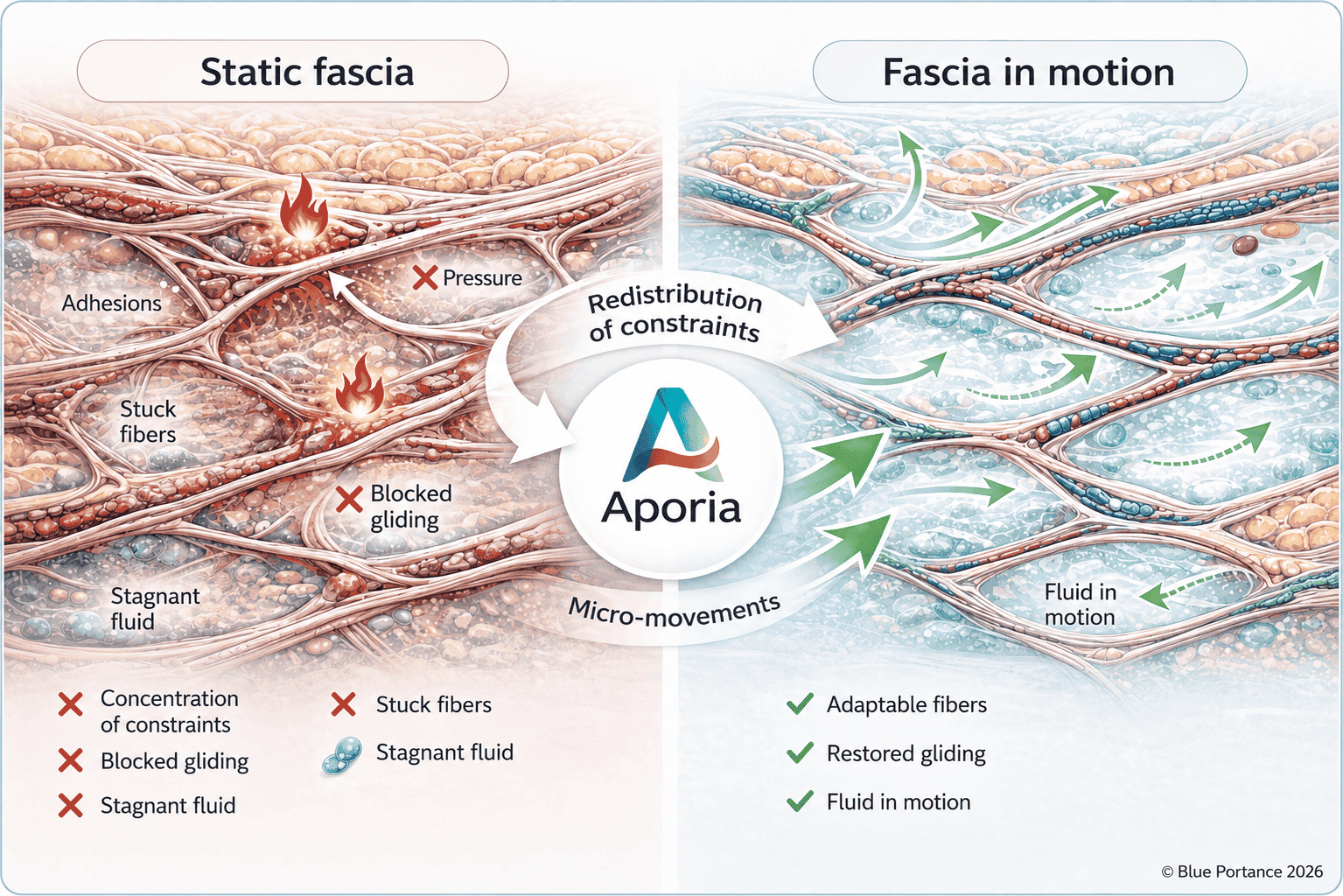
It is to address this problem that a fundamentally different approach to the seat has been developed: no longer seeking the “right position,” but restoring the body’s capacity to adapt continuously — the biomechanical principle underlying the Aporia® dynamic stabilized seat.
6. Conclusion: the body as an orchestra
The body can be understood as a living orchestra. Fascia forms both the instruments and the score: they transmit, dampen, orient and modulate the mechanical forces that flow through every structure.
When this system functions correctly, the forces are distributed, the tissues glide, the nervous system receives coherent signals — and the body maintains its equilibrium with minimal effort. When it is disrupted — through immobility, repeated loads or loss of mechanical variability — the forces concentrate, the tissues stiffen, the signals distort, and pain can emerge, even without any visible lesion.
Restoring the body’s adaptive capacity is therefore not simply a matter of comfort: it is a fundamental biomechanical issue, with direct consequences on tissue health, proprioceptive quality and the regulation of pain.
The body does not need to be forced into a “correct” position — it needs to be given the conditions to continuously find its own balance. Restoring mechanical variability, enabling fascial gliding, and diversifying proprioceptive signals: these are the three biomechanical levers that constitute the foundation of the Aporia® dynamic stabilized seat approach.
Analyze your pain to find the best-suited solution
If you recognize yourself in these mechanisms — sitting pain, persistent discomfort, or a feeling of stiffness — then the challenge is no longer simply to understand them, but to identify what may be mechanically maintaining these patterns.
The key question is now simple: does your seat still allow your body to function… or does it progressively prevent it from doing so?
👉 Our personalized pain analysis tool helps you identify the specific mechanisms involved in your sitting pain — and discover which Aporia® version is best suited to your situation.
Frequently Asked Questions
What is the link between fascia and pain?
What is tensegrity?
How does force distribution limit pain?
Why can prolonged sitting worsen pain?
Why are micro-movements important?
Go further
Deep dive: fascia in real-world conditions
This ARTE documentary illustrates, through real-life cases and clinical observations, the mechanisms described in this article: the role of fascia in movement, tissue adaptation, persistent pain without visible structural damage, and the importance of fascial gliding.
It provides a valuable complement to better visualize these phenomena and understand their real-life impact.
Source: ARTE — The hidden allies of the human body: fascia
Explore further on Blue Portance
- ➡️ Discovering how to act on fascias : “Acting on Fascia: How the Aporia® Bioactive Seat Cushion Restores Load Variability”
- ➡️ Understanding fascial fibrosis : “Why your body can progressively turn into rigidity and chronic pain”
- ➡️ The role of micro-movements : “Why small movements matter more than large ones for relieving sitting pain”
- ➡️ Pudendal neuralgia and sitting pain : “Understanding the mechanical origins of pelvic pain in sitting position”
Scientific references
- Findley, T. W., & Schleip, R. (Eds.) (2007). Fascia Research: Basic Science and Implications for Conventional and Complementary Health Care. Elsevier/Urban & Fischer. [Book Source]
- Ingber, D. E. (1998). The Architecture of Life. Scientific American, 278(1), 48–57. [PubMed]
- Labat, J. J., et al. (2008). Anatomical study of the pudendal nerve and its surgical implications in pudendal neuralgia. Neurosurgery, 62(4), 985–991. [DOI]
- Langevin, H. M. (2006). Connective tissue as a body-wide signaling network. [PubMed]
- Langevin, H. M., et al. (2005). Dynamic fibroblast cytoskeletal response to subcutaneous tissue stretch ex vivo and in vivo. American Journal of Physiology — Cell Physiology, 288(3), C747–C756. [PubMed]
- Langevin, H. M. (2021). Fascia mobility, proprioception, and myofascial pain. Life, 11(7), 668. [PubMed]
- Langevin, H. M., et al. (2011). Reduced thoracolumbar fascia shear strain in human chronic low back pain. BMC Musculoskeletal Disorders, 12, 203. [PubMed]
- Latremoliere, A., & Woolf, C. J. (2009). Central sensitization. [Full Text]
- Moseley, G. L. (2007). Reconceptualising pain according to modern pain science. [PubMed]
- Myers, T. W. (2014). Anatomy Trains. [Author Site]
- Panjabi, M. M. (1992). The stabilizing system of the spine. Journal of Spinal Disorders, 5(4), 383–389. [DOI]
- Schleip, R. (2003). Fascial plasticity. [PubMed]
- Schleip, R., et al. (2012). Fascia as a sensory organ. [Source]
- Stecco, C. (2015). Functional Atlas of the Human Fascial System. Elsevier. [Book Source]
- Tracey, I., & Mantyh, P. W. (2007). The cerebral signature for pain. [PubMed]
© Blue Portance. Reproduction and distribution permitted for non-commercial purposes, provided the source is cited: “Blue Portance – SBNFA™ Doctrine”.
