

Appendices, Glossary, and Bibliography
In brief. This chapter brings together the definitions of the SBNFA™ framework — adaptability potential, cone of balance, zero point, multi-criteria analysis… —, the index of the nineteen evaluation variables and an annotated bibliography of twenty-five scientific references, with their contribution and scope.
This final chapter of the expert dossier brings together the glossary of terms used, the index of the nineteen state variables and an annotated bibliography specifying, for each source, its contribution to the framework and the limits of its use.
It restates the evidence-status conventions, the dossier version and how to cite it, and opens the scores, variables and sources to scientific discussion.
How to Use These Appendices
This final chapter gathers what is needed to read, cite and discuss the rest of the dossier: a glossary of the terms used, the index of the nineteen variables and an annotated bibliography that states, for each source, what it contributes and its scope within the framework.
These concepts are developed further in the Blue Portance Knowledge Base.
It is designed as a working tool for the ergonomist, physical therapist, researcher or purchaser who wishes to check a line of reasoning. The definitions are those of the SBNFA™ framework and the Blue Portance glossary; they add, remove or reformulate none of the framework’s variables [1].
1. Glossary
The terms below are used with a precise meaning throughout the dossier. Where a term is a Blue Portance construct, its status is indicated.
| Term | Definition |
|---|---|
| SBNFA™ | Biomechanical, Neuro-Fascial and Adaptive System. A model applied to the functional evaluation of seating interfaces, formalized in the Blue Portance framework and built on phenomena documented in the literature. |
| Adaptability | Integrative concept: the body’s capacity to adjust its postural organization and tissue responses to stresses while preserving balance, mobility and load distribution. It is expressed in context. [SBNFA PROPOSITION] Concept of the SBNFA framework. |
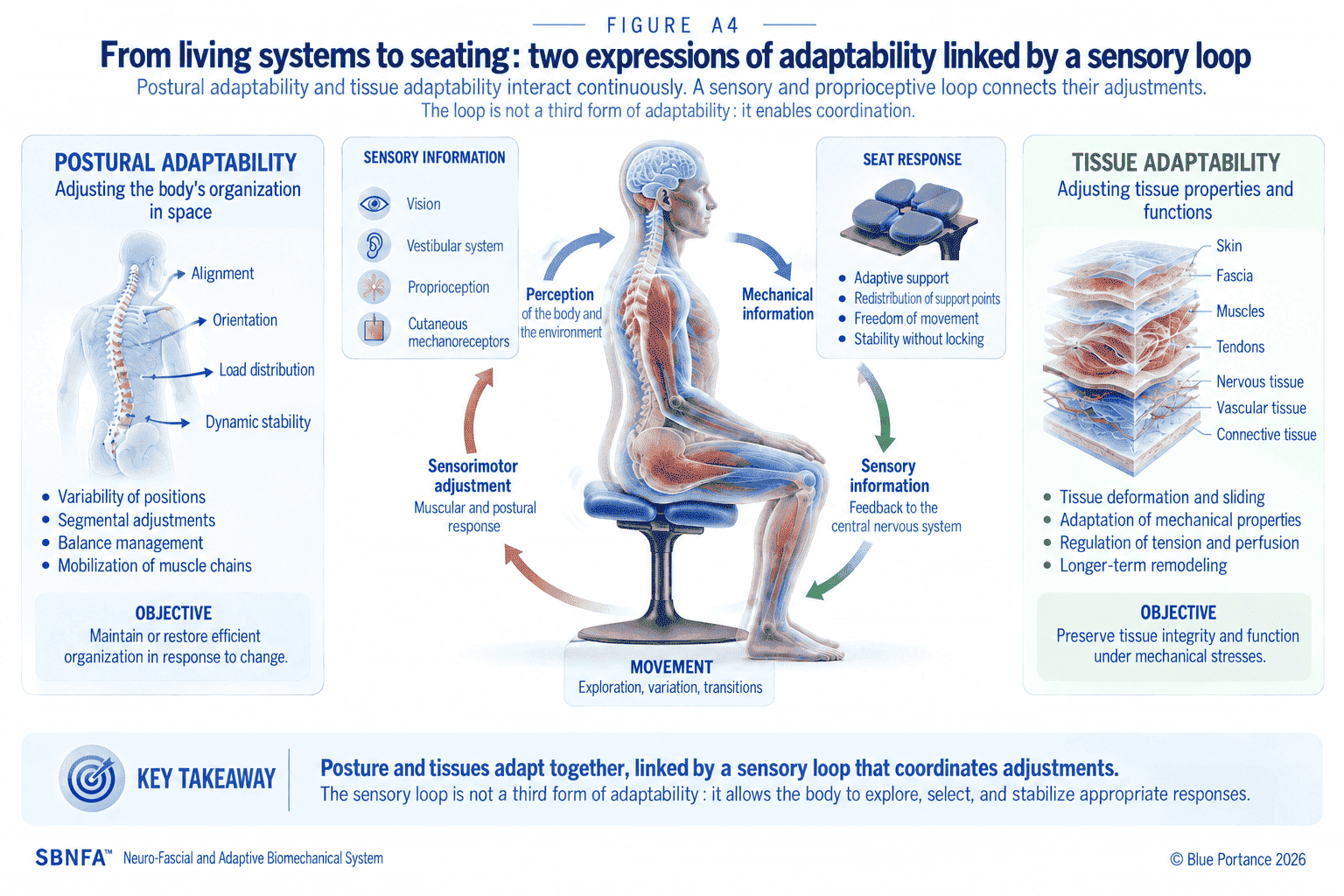
| Postural adaptability | The expression of adaptability related to the subject’s postural organization: immediate adjustment of posture, support points and balance. |
| Tissue adaptability | The expression of adaptability related to the response of load-bearing tissues to mechanical stresses, over a longer term than postural adjustment. |
| Sensory and proprioceptive loop | Body movement, mechanical information transmitted to the seat, response of the seat, sensory feedback to the body, sensorimotor adjustment. The seat does not produce proprioception: it processes the mechanical information it receives (Function 6). This is not a third form of adaptability but a cross-cutting mechanism of adjustment. |
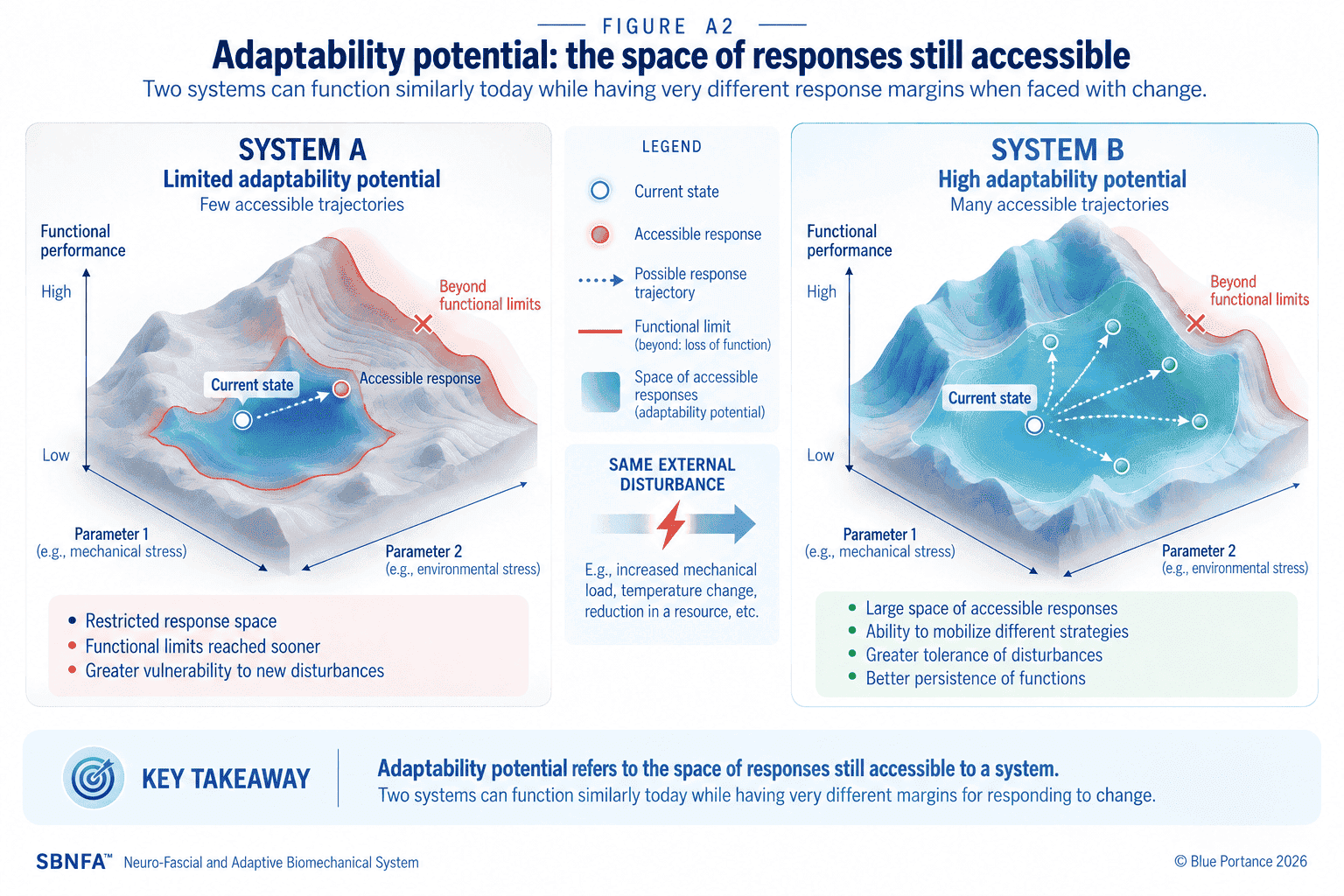
| Adaptability potential (in the seated position) | The full set of adaptive options available to the subject in a given situation, given what the seat allows or constrains. [SBNFA PROPOSITION] Central concept of the SBNFA framework, operationalized by ADP-1 and ADP-2. |
| Postural adaptive reserve | The functional margin remaining before compensations are exhausted. [SBNFA PROPOSITION] Concept of the SBNFA framework. |
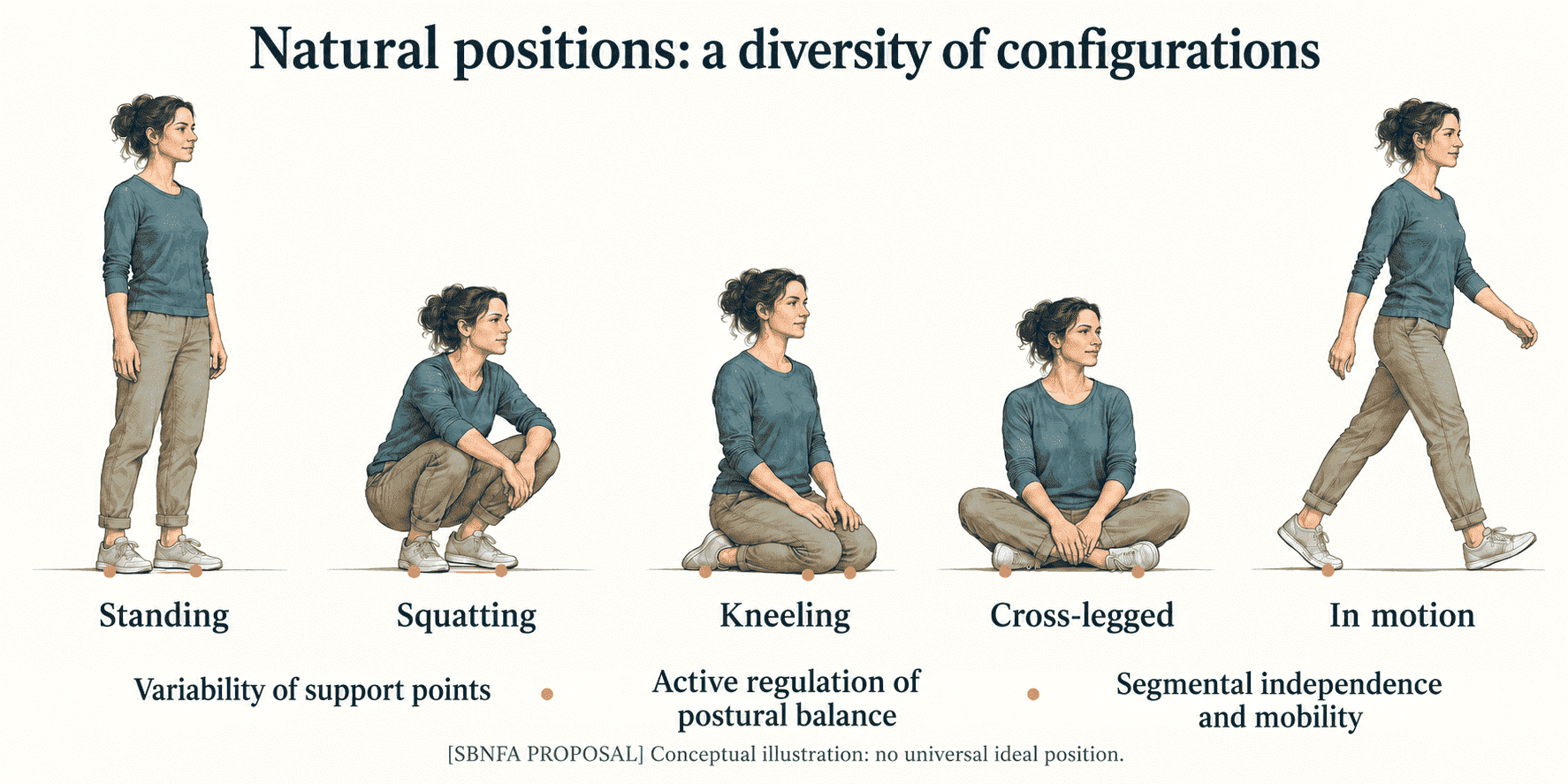
| Natural position | A body configuration in which the body retains a capacity for adjustment, load redistribution and active regulation (standing, squatting, kneeling, cross-legged, in motion). |
| Capability offered | What the seat’s architecture allows or constrains, regardless of what the subject does with it. This is what is rated. |
| Structural analysis (MICMAC) | A method that cross-references the variables of a system in a direct-influence matrix, then derives their driving power, dependence and indirect influences. Applied to the nineteen variables, it describes the structure of the model without altering any rating. [SBNFA PROPOSITION] Matrix currently being consolidated. |
| Influence, dependence | The sum of the intensities in a row (what the variable conditions) and in a column (what conditions it) of the influence matrix. These are structural indices, not clinical measurements. |
| Direct relationship | A change in capability A can directly modify the functional expression of capability B, without a third variable of the grid acting as an intermediary. Rated from 0 to 3. |
| Highest fully demonstrated level | Rating rule: the score is the highest level whose state is fully established by observation. |
| ND | Not determined: insufficient data or observations to assign a score; never converted to 0. |
| Level 1 / Level 2 | Multi-criteria analysis based on technical specifications, user feedback and expert judgment / instrumented scientific evaluation. |
| Zero point | The reference mechanical organization around which balance regulation operates; its adjustment is evaluated under EQU-3. |
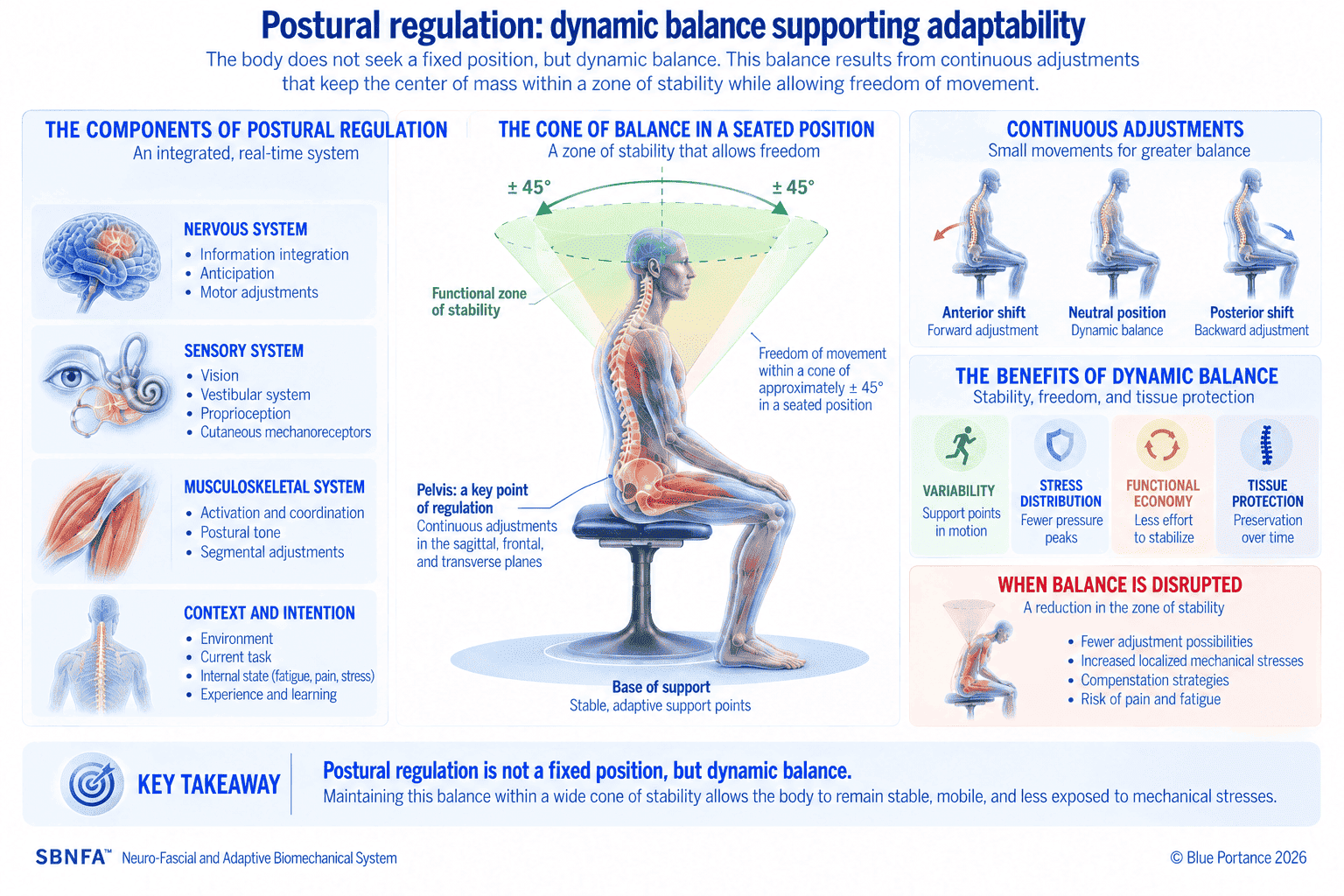
| Cone of economy / cone of balance | Concept developed by Dubousset and Hasegawa linking standing balance to the economy of muscle activity within a space of adaptive movements. Transposed functionally to seating as a stability perimeter (EQU-2) [SBNFA PROPOSITION]. |
| Chain of balance | Coordinated organization linking the lower limbs, pelvis, spine and head, described for the standing position. |
| Pelvic incidence | A morphological parameter of the subject that cannot be modified by the seat. The seat can modify the functional orientation of the pelvis, not the anatomical incidence. |
| Spine–pelvis pivoting | Small-amplitude relative reorganization between spine and pelvis, via the sacroiliac joint (COM-2). This joint has a small range of motion, but the literature describes its functional role in load transfer and postural regulation of the pelvis, the pelvis being described as the central relay of the compensation chain [2, 3]. [ESTABLISHED] [SBNFA PROPOSITION] Its inclusion in Function 2 motivates the COM-2 variable without validating it; the seat is evaluated on what it allows to be expressed, or blocks. |
| Micromovement | A very small-amplitude adaptation initiated by the subject; the seat is evaluated on its capacity to respond to it (ADP-2). |
| Threshold, dead zone, hysteresis | Mechanical indicators of an interface’s response to low-level loading: minimum triggering amplitude, range with no response, gap between outbound and return trajectories. |
| Coupling | Mechanical entrainment of one segment or side of the body by the movement of another, imposed by the support. |
| Single-unit seat | A seat whose load-bearing surface or mechanism is a single unit and transmits a local input globally. An architectural description, not a value judgment. |
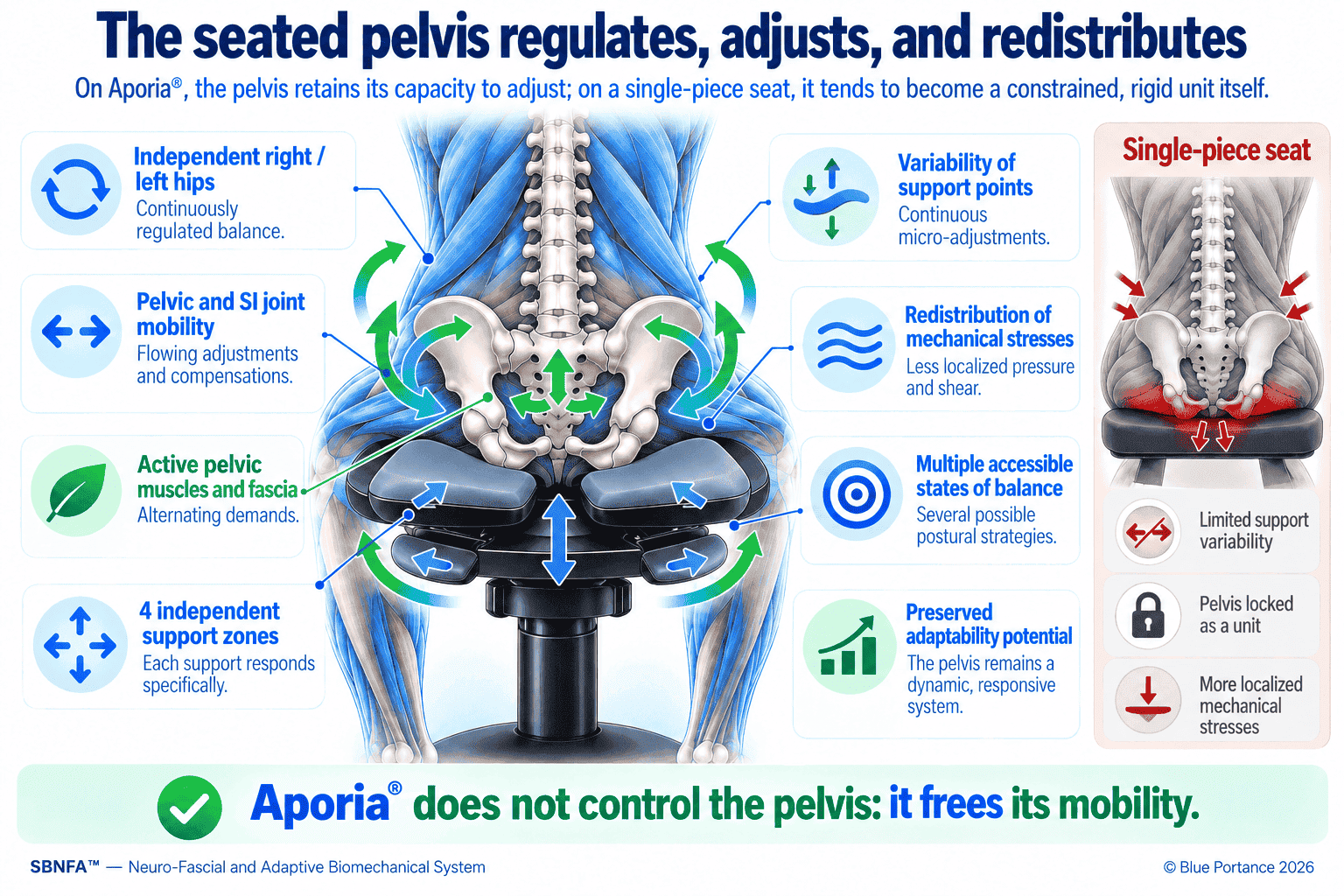
| Segmented architecture | A seat with several load-bearing zones that can respond mechanically and independently. Segmentation is one possible means; it is not a condition for the PRE-1 score. |
| Pad | In the ExoBase Aporia®, a load-bearing zone mounted on a ball joint that moves in all directions (360°), with a limited up–down tilt range, and fitted with its own foam and its own cover; four pads (front right, front left, rear right, rear left). |
| Forced sliding, shear | Relative displacement imposed on tissues against the support, or between tissue planes, during a global movement. |
| Mechanotransduction, creep, reperfusion | Biological phenomena (conversion of mechanical stresses into biological signals, progressive deformation under load, restoration of perfusion) treated as expected effects or explanatory mechanisms, not as variables. |
2. Index of the Nineteen Variables
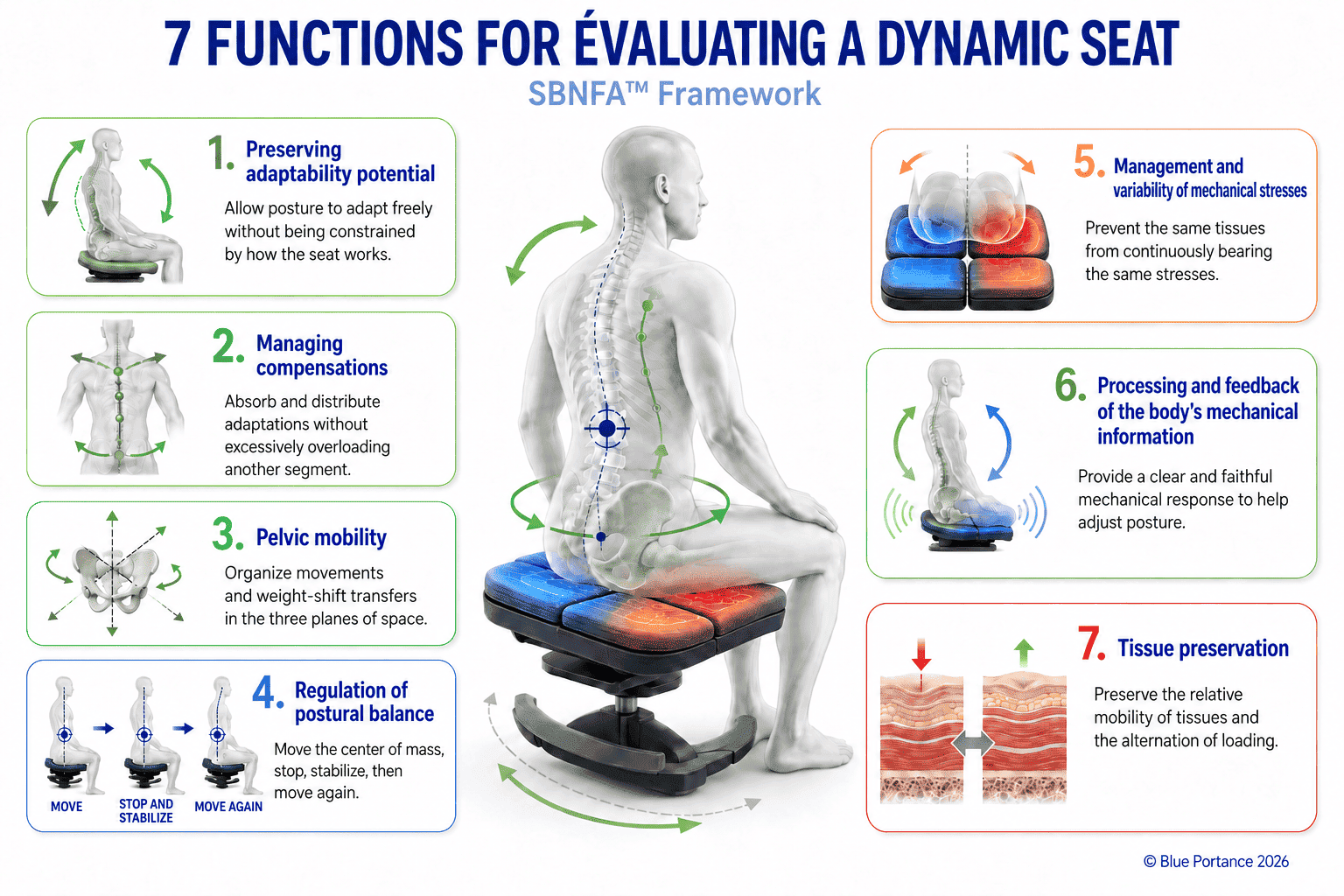
The following index summarizes the nineteen state variables, the function each belongs to and the capability evaluated. Details of the observations and interpretation pitfalls are in Chapter 3 (dynamic seating evaluation grid).
| Code | Variable | Function | Capability evaluated |
|---|---|---|---|
| ADP-1 | Subject-led control of postural adaptation | 1. Adaptability | The subject initiates and controls their own changes; the seat follows them without blocking, steering or taking over from them |
| ADP-2 | Response to adaptive micromovements | 1. Adaptability | The seat’s response to very small-amplitude adaptations |
| COM-1 | Horizontal pelvic displacement of a few millimeters | 2. Compensations | Latitude offered for small horizontal displacements of the pelvis |
| COM-2 | Spine–pelvis pivoting via the sacroiliac joint | 2. Compensations | Relative spine–pelvis pivoting not blocked by the support |
| MOB-1 | Sagittal mobility | 3. Pelvic mobility | Anteversion and retroversion permitted by the seat |
| MOB-2 | Frontal mobility | 3. Pelvic mobility | Tilt and left/right weight transfer |
| MOB-3 | Rotational mobility in the transverse plane | 3. Pelvic mobility | Rotation with one hip opening and the other closing |
| EQU-1 | Independent left/right mobility of the hip–ankle chains over 360° | 4. Balance | Independent action of each chain, with no imposed coupling |
| EQU-2 | Postural latitude perimeter | 4. Balance | Space in which to move, stop, stabilize and move off again |
| EQU-3 | Zero-point adjustment | 4. Balance | Adjustment of the reference mechanical organization |
| CON-1 | Spatial distribution of pressure | 5. Mechanical stresses | Support distributed among the zones able to bear it |
| CON-2 | Temporal variability of pressure | 5. Mechanical stresses | Shifting and redistribution of support zones over time |
| INF-1 | Consistency of the mechanical response | 6. Mechanical information | Correspondence between input and response |
| INF-2 | Localized and differentiated processing | 6. Mechanical information | Local origin preserved, differentiated response |
| INF-3 | Proportionality of the response | 6. Mechanical information | Progressiveness of the response according to intensity |
| PRE-1 | Freedom and independence of movement of each segment | 7. Tissue preservation | Load-bearing regions accommodated independently |
| PRE-2 | Localized micromovements | 7. Tissue preservation | Local accommodation of small movements |
| PRE-3 | Continuous load alternation | 7. Tissue preservation | Repeated alternation of loading and offloading |
| PRE-4 | Appropriate deformability of support surfaces | 7. Tissue preservation | Local conformation to body shape while maintaining support |
Index of Explanatory Diagrams
- Figure 1 — Construction chain · Full-resolution SVG
- Figure 2 — Seven functions and nineteen variables · Full-resolution SVG
- Figure 3 — Types of claim and evidence · Full-resolution SVG
- Figure 4 — Interdependencies and filters · Full-resolution SVG
- Figure 5 — Bases of support, standing and seated
- Figure 6 — SBNFA™ Benchmark: 6 dynamic seats assessed on 7 functions
The diagrams explain the method; they do not constitute measurements or a validation of the product ratings.
Illustrations
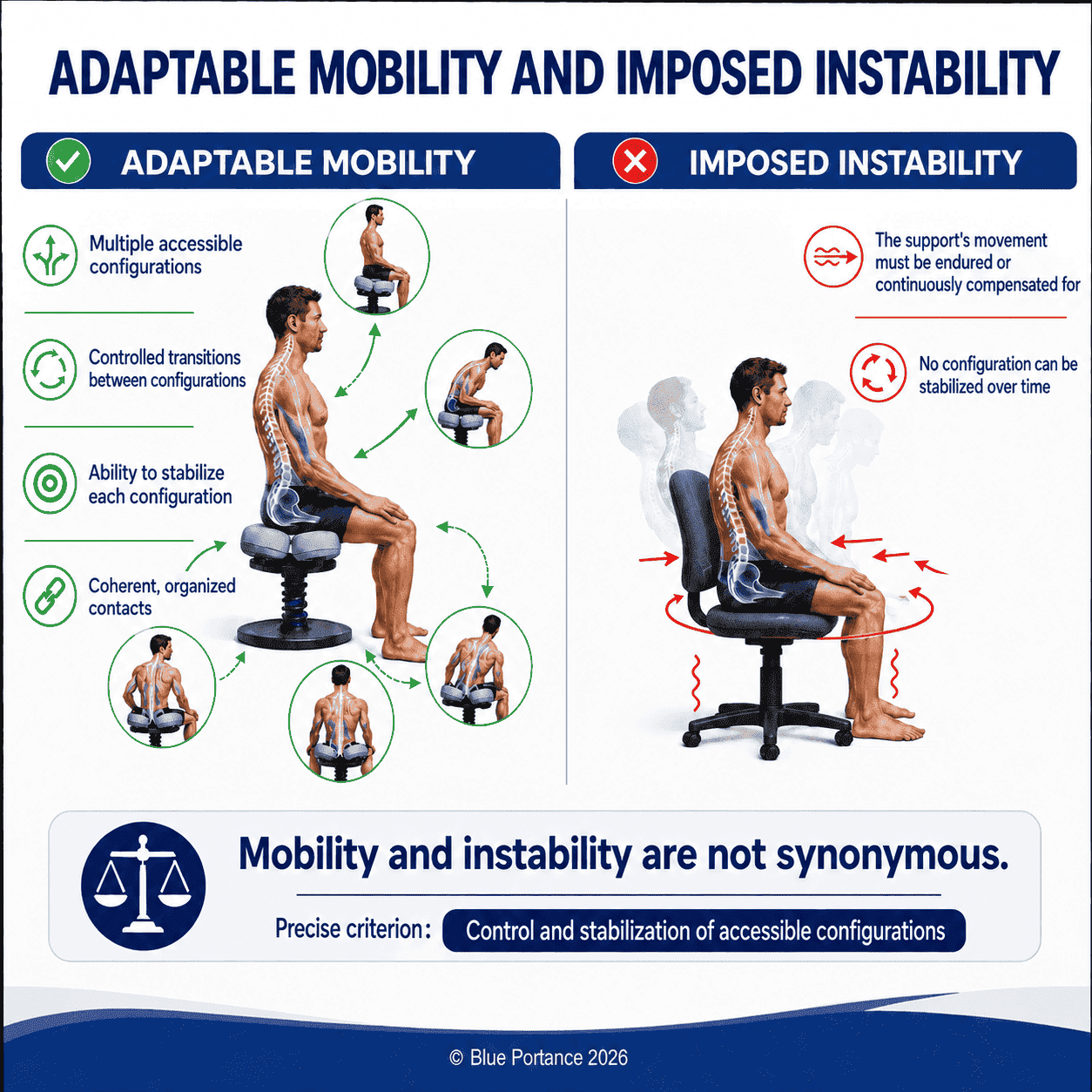
- Illustration 1 — Adaptable mobility and imposed instability · 01-methodological-framework.html · section-3 · [SBNFA PROPOSITION] · Full-resolution image
- Illustration 2 — Natural positions · 02-foundational-principles.html · section-1 · [SBNFA PROPOSITION] · Full-resolution image
- Illustration 3 — Postural regulation: a dynamic balance in the service of adaptability · 02-foundational-principles.html · section-5 · [SBNFA PROPOSITION] · Full-resolution image
- Illustration 4 — Adaptability potential: the space of responses still accessible · 02-foundational-principles.html · section-6 · [SBNFA PROPOSITION] · Full-resolution image
- Illustration 5 — From the living body to the seat: two expressions of adaptability linked by a sensory loop · 02-foundational-principles.html · section-6 · [SBNFA PROPOSITION] · Full-resolution image
- Illustration 6 — 7 functions for evaluating a dynamic seat · 03-functional-grid.html · section-1 · [SBNFA PROPOSITION] · Full-resolution image
- Illustration 7 — Pelvic mobility at the heart of adaptability · 04-benchmark.html · section-3 · [MECHANICAL] · Full-resolution image
3. Annotated Bibliography: Contribution and Limits of Use
Each source is cited with its contribution to the framework and its scope: precisely what it underpins, and the context in which it was established.
Motor Control, Variability, and Posture
| Reference | Contribution | Scope within the framework |
|---|---|---|
| Bernstein (1967) [4] | Movement coordination as the management of degrees of freedom | General theoretical foundation, drawn on for Function 1 |
| Stergiou et al. (2006) [5]; Stergiou & Decker (2011) [6] | Movement variability as a characteristic of healthy systems, within an optimal range | Optimal-variability framework, applied to seating by the SBNFA framework |
| Peterka (2002) [7]; Mergner et al. (2002) [8] | Sensorimotor integration models of postural control | Postural control models drawn on for Function 4 |
| Boonstra et al. (2013) [9] | Differentiated contribution of the ankle and hip to multi-segmental balance | Documents joint contributions to balance control; the EQU-1 requirement as applied to seating is an SBNFA proposition |
| Horak (2006) [10] | Distinction between postural orientation and equilibrium | Conceptual framework for postural control |
Chain of Balance, Pelvis, and Spine
| Reference | Contribution | Scope within the framework |
|---|---|---|
| Hasegawa & Dubousset (2022) [3] | Chain of balance, the pelvis as a “pelvic vertebra,” cone of economy | Underpins the compensation chain (Functions 2 to 4); cone of economy transposed functionally to seating |
| Barrey et al. (2013) [11] | Compensatory mechanisms for maintaining sagittal balance | Underpins pelvic mobility and sagittal compensations (Functions 2 and 3) |
| Vleeming et al. (2012) [2] | Anatomy and function of the sacroiliac joint | Documents sacroiliac anatomy and function; does not directly validate the COM-2 variable |
| Roussouly et al. (2005) [12] | Normal types of lumbopelvic sagittal alignment organized by pelvic incidence | Documents variability of standing alignment; individualization of the seated zero point is proposed by SBNFA |
Seating, Dynamics, and Seated Posture
| Reference | Contribution | Scope within the framework |
|---|---|---|
| Pynt (2015) [13] | Definition of dynamic sitting: action provided by the person and accommodated by the chair | Underpins the distinction between subject-led control and movement produced by the seat (ADP-1) |
| Ellegast et al. (2012) [14] | Comparison of four dynamic office chairs with a conventional chair: muscle activation, physical activity, posture | Shows that effects depend on the device; motivates function-by-function evaluation |
| Gregory et al. (2006) [15] | Comparison of a stability ball and an office chair: lumbar activation and posture | Illustrates the value of evaluating the adaptive capability offered, beyond the surface itself |
| Hamaoui et al. (2015) [16] | A sloping seat does not reduce the strain sustained by the postural chain | Shows that seat angle alone is not sufficient |
| Occhipinti et al. (1993) [17] | Criteria for the ergonomic evaluation of work chairs | Historical reference for chair evaluation criteria |
| O’Sullivan et al. (2006) [18] | Effect of different upright sitting postures on curvature and muscle activation | Shows that an upright posture is not a passive state |
| Roman-Liu et al. (2023) [19] | Literature review on lumbar intradiscal pressure in standing and sitting | Illustrates how stresses vary with posture |
| Raichlen et al. (2020) [20] | Resting in a squatting position among the Hadza; muscle activity higher than when sitting on a chair | Illustrates the difference between rest and immobility; does not prescribe reproducing the squat |
Tissues, Fascia, and Load
| Reference | Contribution | Scope within the framework |
|---|---|---|
| Landis (1930) [21] | Capillary pressure in human skin; historical foundation for the study of prolonged compression | Historical foundation of Function 5; no ischemia threshold applicable to seating is derived from it |
| Lengsfeld et al. (2000) [22] | Changes in spinal load during rotatory dynamic sitting | Exploratory single-subject study, cited for spinal load in rotatory sitting |
| Langevin (2006) [23] | Connective tissue as a body-wide signaling network | Published signaling-network hypothesis; does not validate a neuro-fascial effect of a seat |
| Langevin et al. (2011) [24] | Reduced thoracolumbar fascial gliding in chronic low back pain | Association observed in the thoracolumbar region; proves neither causation nor any benefit from a seat |
| Schleip et al. (2012) [25] | Review of definitions and nomenclature of fascia | Clarifies the nomenclature used |
Internal Framework Documents
| Document | Content | Scope |
|---|---|---|
| Part I [26] | Scientific and methodological framework: foundational principles, functions, requirements | Blue Portance internal document |
| Part II [1] | Rating procedures: scale, anchors, rules | Blue Portance internal document |
| Part III [27] | Monographs and comparative evaluation of the six devices | Level 1 evaluation; prototype-specific documentary basis |
| Summary [28] | Summary for practitioners | Its commercial content is not reproduced in this dossier |
Structural Analysis Method
| Reference | Contribution | Scope within the framework |
|---|---|---|
| Godet (2007) [29] | Presentation of structural analysis and the MICMAC method in strategic foresight | Provides the method for reading interdependencies; the matrix applied to the nineteen variables is specific to the framework and offered as a proposition |
4. Version, Conventions, and Citation
This dossier is version 1.1, dated October 5, 2026. It will be revised when the framework evolves or when a well-argued contribution warrants it; each revision will carry a new date and a correction history.
References are numbered in order of first citation within each chapter; each one links, where available, to the publisher’s or bibliographic database’s record. The status labels ([ESTABLISHED], [MECHANICAL], [SBNFA PROPOSITION], [OUTLOOK]) defined on the dossier home page apply to all chapters.
To cite this dossier: Ayache, G. (2026). SBNFA™ Framework — Expert Dossier. Blue Portance, version 1.1, October 5, 2026.
Return to the dossier pillar page, or to Chapter 1 (methodological framework for seating evaluation) to start again from the beginning.
Frequently Asked Questions
What is the zero point of a seat?
It is the reference mechanical organization around which balance is regulated in the seated position. On stabilized dynamic seating, it is adjusted to the person’s sagittal organization — on Aporia®, with a front, neutral or rear wedge — rather than imposing a fixed angle such as a 90° pelvis–femur relationship.
Where can I find the precise definition of each variable?
In this chapter’s index for the short definition, and in Chapter 3 for what is observed and the interpretation pitfall for each variable. The detailed rating anchors are set out in Part II of the framework.
What do the labels ESTABLISHED, MECHANICAL, SBNFA PROPOSITION and OUTLOOK mean?
They indicate the status of a claim: established by the cited scientific literature, an observable architectural finding on a device, a proposition specific to the SBNFA model developed from that knowledge, or further work planned through instrumented measurements or additional studies.
Have all the cited references been verified?
The scope of the core sources has been specified in the annotated bibliography; this does not constitute an exhaustive full-text audit of the articles. The internal documents cited are not peer-reviewed publications. Bernstein (1967) and Landis (1930) are cited without a stable digital link.
How can I report an error or challenge a score?
The dossier is open to scientific discussion: a score, a variable or a source can be challenged with arguments and observations. Accepted corrections are carried over into the framework documents and dated.
References
The contribution and scope of each source are detailed in Chapter 6 (annotated bibliography). A reference associated with a variable documents a phenomenon; it does not validate the variable.
- Blue Portance, 2026 (b) — SBNFA™ Framework — Part II: Rating Procedures. Internal document, version of August 3, 2026.
- Vleeming et al., 2012 — The sacroiliac joint: an overview of its anatomy, function and potential clinical implications. Journal of Anatomy, 221(6), 537–567.
- Hasegawa & Dubousset, 2022 — Cone of economy with the chain of balance: historical perspective and proof of concept. Spine Surgery and Related Research, 6(4), 337–349.
- Bernstein, 1967 — The co-ordination and regulation of movements. Pergamon Press.
- Stergiou et al., 2006 — Optimal movement variability: a new theoretical perspective for neurologic physical therapy. Journal of Neurologic Physical Therapy, 30(3), 120–129.
- Stergiou & Decker, 2011 — Human movement variability, nonlinear dynamics, and pathology: is there a connection?. Human Movement Science, 30(5), 869–888.
- Peterka, 2002 — Sensorimotor integration in human postural control. Journal of Neurophysiology, 88(3), 1097–1118.
- Mergner, Maurer & Peterka, 2002 — Sensory contributions to the control of stance: a posture control model. Advances in Experimental Medicine and Biology, 508, 147–152.
- Boonstra, Schouten & van der Kooij, 2013 — Identification of the contribution of the ankle and hip joints to multi-segmental balance control. Journal of NeuroEngineering and Rehabilitation, 10, 23.
- Horak, 2006 — Postural orientation and equilibrium: what do we need to know about neural control of balance to prevent falls?. Age and Ageing, 35(Suppl. 2), ii7–ii11.
- Barrey et al., 2013 — Compensatory mechanisms contributing to keep the sagittal balance of the spine. European Spine Journal, 22(Suppl. 6), S834–S841.
- Roussouly et al., 2005 — Classification of the normal variation in the sagittal alignment of the human lumbar spine and pelvis in the standing position. Spine, 30(3), 346–353.
- Pynt, 2015 — Rethinking design parameters in the search for optimal dynamic seating. Journal of Bodywork and Movement Therapies, 19(2), 291–303.
- Ellegast et al., 2012 — Comparison of four specific dynamic office chairs with a conventional office chair: impact upon muscle activation, physical activity and posture. Applied Ergonomics, 43(2), 296–307.
- Gregory, Dunk & Callaghan, 2006 — Stability ball versus office chair: comparison of muscle activation and lumbar spine posture during prolonged sitting. Human Factors, 48(1), 142–153.
- Hamaoui et al., 2015 — Sitting on a sloping seat does not reduce the strain sustained by the postural chain. PLOS ONE, 10(2), e0116353.
- Occhipinti et al., 1993 — Criteria for the ergonomic evaluation of work chairs. La Medicina del Lavoro, 84(4), 274–285.
- O’Sullivan et al., 2006 — Effect of different upright sitting postures on spinal-pelvic curvature and trunk muscle activation in a pain-free population. Spine, 31(19), E707–E712.
- Roman-Liu, Kamińska & Tokarski, 2023 — Differences in lumbar spine intradiscal pressure between standing and sitting postures: a comprehensive literature review. PeerJ, 11, e16176.
- Raichlen et al., 2020 — Sitting, squatting, and the evolutionary biology of human inactivity. Proceedings of the National Academy of Sciences, 117(13), 7115–7121.
- Landis, 1930 — Micro-injection studies of capillary blood pressure in human skin. Heart, 15, 209–228.
- Lengsfeld et al., 2000 — Spinal load changes during rotatory dynamic sitting. Clinical Biomechanics.
- Langevin, 2006 — Connective tissue: a body-wide signaling network?. Medical Hypotheses, 66(6), 1074–1077. Network hypothesis, with no validation of a seating effect.
- Langevin et al., 2011 — Reduced thoracolumbar fascia shear strain in human chronic low back pain. BMC Musculoskeletal Disorders, 12, 203.
- Schleip, Jäger & Klingler, 2012 — What is “fascia”? A review of different nomenclatures. Journal of Bodywork and Movement Therapies, 16(4), 496–502.
- Blue Portance, 2026 (a) — SBNFA™ Framework for Evaluating Seating Devices — Part I: Scientific and Methodological Framework. Internal document, version of August 3, 2026.
- Blue Portance, 2026 (c) — SBNFA™ Framework — Part III: Monographs and Comparative Evaluation (V14). Internal document, August 25, 2026.
- Blue Portance, 2026 (d) — SBNFA™ Framework — Evaluation Summary (V20). Internal document, August 25, 2026.
- Godet, 2007 — Identifier les variables clés : l’analyse structurelle, in Manuel de prospective stratégique, tome 2 : L’art et la méthode. Dunod.